

Bhutan, often called the “Land of the Thunder Dragon”, is a Himalayan kingdom unlike any other. Sandwiched between India and China, it is one of the few places on earth where progress is measured by Gross National Happiness rather than GDP. Visitors are greeted with serene landscapes, centuries-old traditions, and the warm hospitality of people who live in harmony with nature.
With its cliffside monasteries, vibrant festivals, and snow-capped mountains, Bhutan offers not only a journey through breathtaking landscapes but also a journey inward – into spirituality, balance, and peace.
Best Cities in Bhutan
Thimphu
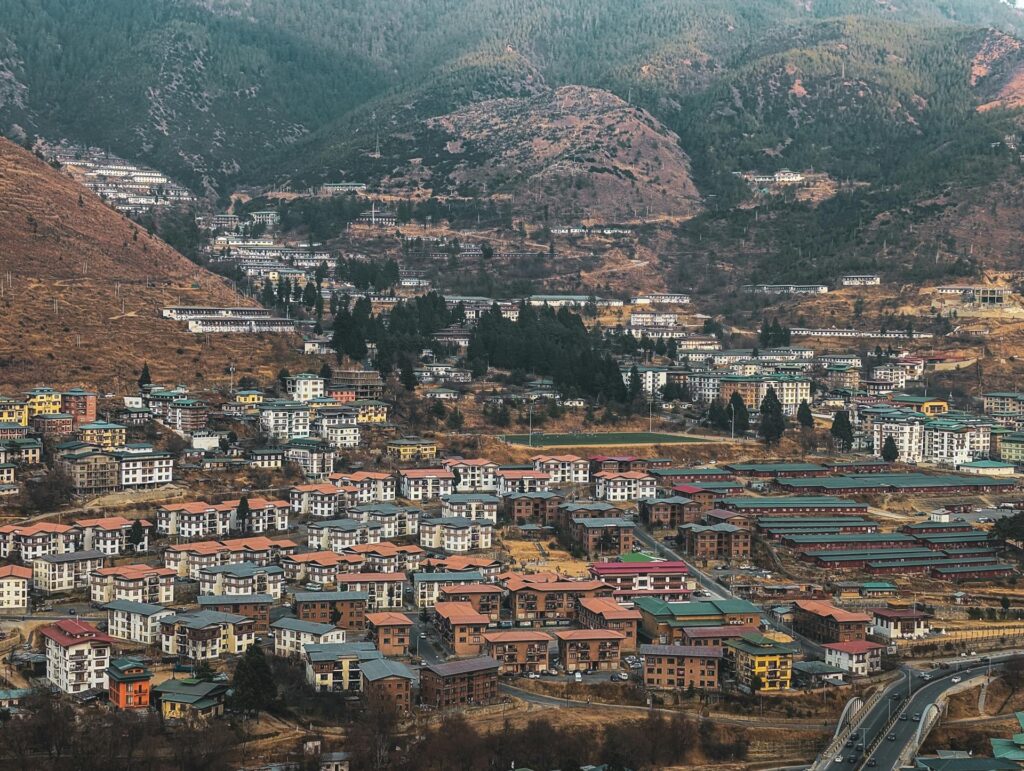
Bhutan’s capital is unlike any other – a city where ancient traditions coexist with a quietly modern lifestyle. It’s famously the only capital in the world without traffic lights, relying instead on hand gestures from white-gloved policemen. Thimphu’s mix of dzongs, monasteries, and coffee shops gives visitors a rare balance of cultural depth and contemporary comfort.
Highlights include the Tashichho Dzong, a striking fortress that houses both government offices and the central monastic body, and the 51-meter-tall Buddha Dordenma Statue, which gazes protectively over the valley. The Centenary Farmers’ Market is the best place to experience Bhutanese flavors and meet locals, while the National Institute for Zorig Chusum offers insight into the country’s 13 sacred arts, from thangka painting to wood carving. Whether you’re wandering through museums or watching monks debate at monasteries, Thimphu feels both intimate and timeless – an essential starting point for exploring Bhutan.
Paro
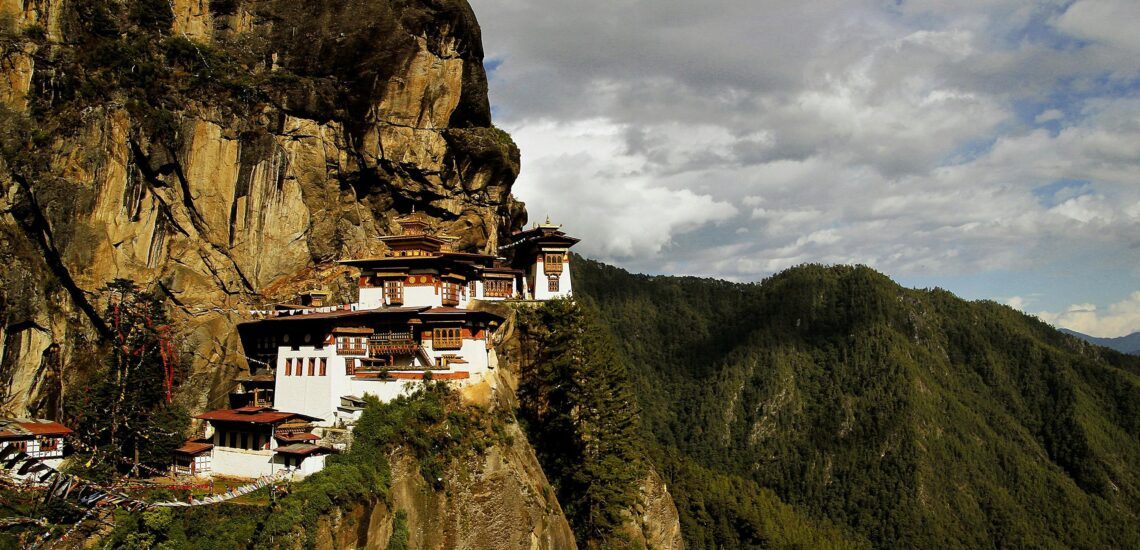
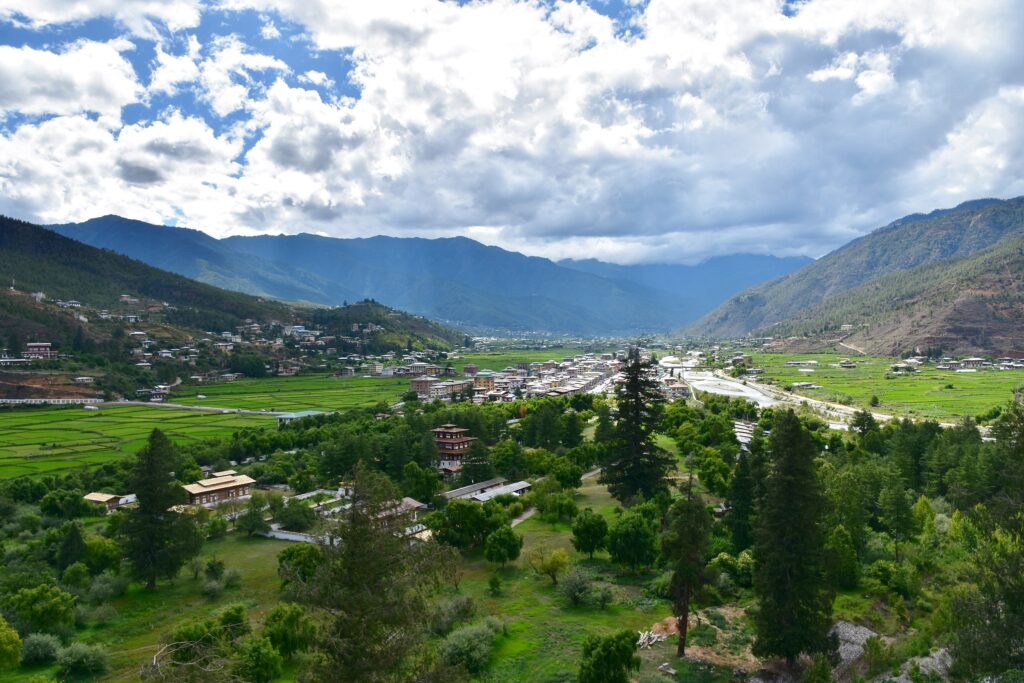
Paro is Bhutan’s welcoming gateway, home to the country’s only international airport and surrounded by wide valleys of rice paddies and pine forests. It’s best known for the Tiger’s Nest Monastery (Paro Taktsang), perched dramatically on a cliffside nearly 3,000 feet above the valley floor. The hike to this sacred site is both a physical challenge and a spiritual journey, making it a highlight of any trip to Bhutan.
Beyond Taktsang, Paro is rich in history and culture. The impressive Rinpung Dzong, with its carved balconies and riverside setting, remains a center of both religious and administrative life. Just above it, the National Museum of Bhutan, housed in a former watchtower, showcases the kingdom’s art, artifacts, and traditions. Wandering through Paro’s traditional villages, visitors encounter farmhouses, terraced fields, and the everyday rhythm of Bhutanese life – all against a backdrop of serene mountain landscapes.
Punakha
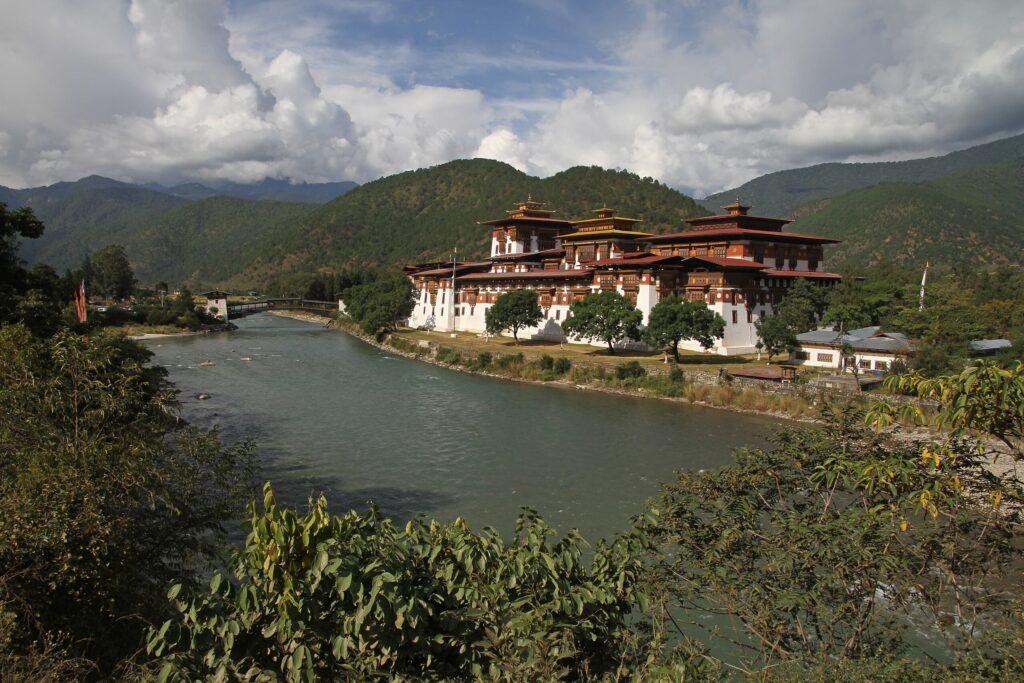
Punakha, the former capital of Bhutan, is a fertile valley known for its warm climate and rice terraces. At its heart stands the magnificent Punakha Dzong, widely regarded as the most beautiful fortress in the country. Set at the confluence of the Pho Chhu and Mo Chhu rivers, its whitewashed walls, golden spires, and intricate woodwork make it a masterpiece of Bhutanese architecture. Inside, the dzong houses sacred relics and continues to serve as an important monastic and administrative center.
Beyond the dzong, Punakha offers memorable cultural and scenic experiences. The Chimi Lhakhang, also known as the Temple of Fertility, is a pilgrimage site visited by couples from across Bhutan. Nearby, one of the country’s longest suspension bridges stretches across the river, offering dramatic views of the valley. With its blend of history, spirituality, and natural beauty, Punakha is an essential stop on any Bhutan journey.
Phobjikha Valley (Gangtey)
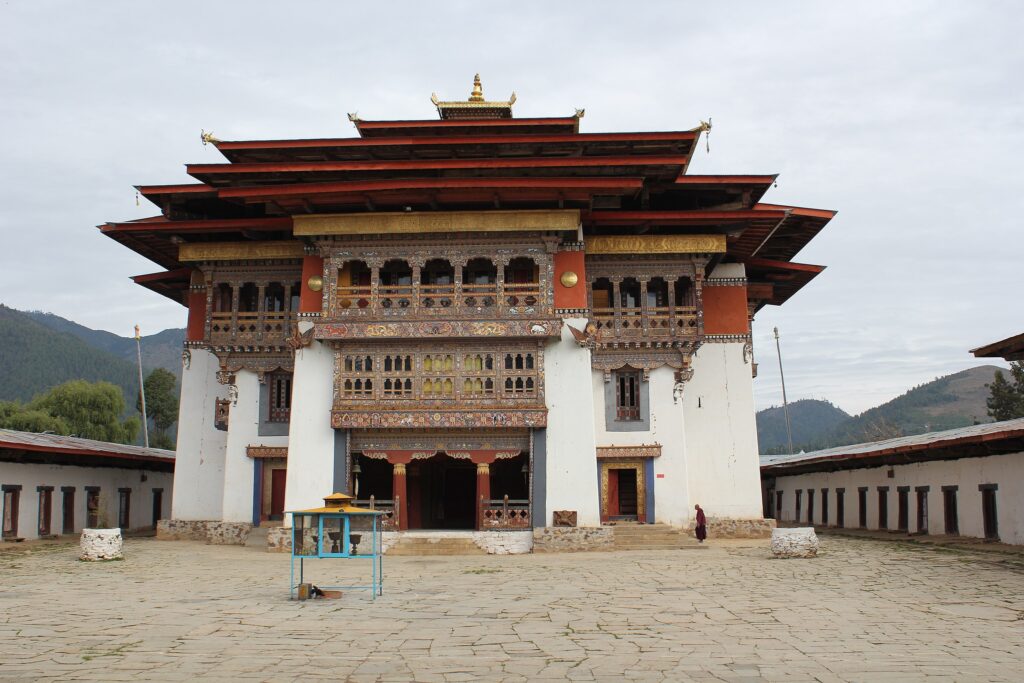
Phobjikha Valley, a sweeping glacial basin at 3,000 meters, is one of Bhutan’s most scenic and tranquil destinations. Surrounded by pine forests and rolling hills, it feels untouched and timeless. The valley is especially famous as the winter home of the endangered black-necked cranes, which arrive from Tibet each November. Their arrival is marked by the vibrant Black-Necked Crane Festival, a unique blend of conservation and culture.
At the spiritual heart of the valley stands Gangtey Monastery, a centuries-old seat of Buddhist learning. Visitors can explore its halls, join prayers with monks, or simply enjoy the meditative calm it exudes. The Gangtey Nature Trail is a gentle hike that winds through fields, villages, and forests, making it a perfect way to soak in the valley’s atmosphere. With its rare wildlife, cultural depth, and serene landscapes, Phobjikha offers a slower, contemplative side of Bhutan.
Bumthang Valley
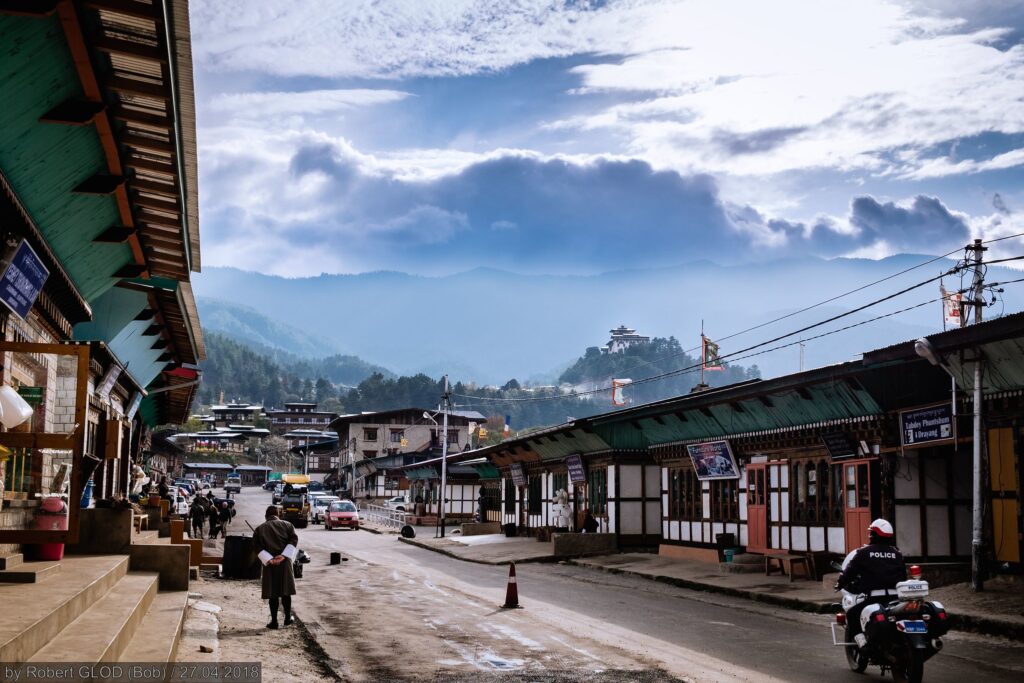
Bumthang, often called the spiritual heart of Bhutan, is actually a collection of four valleys – Choekhor, Tang, Ura, and Chhume – each rich in culture, legend, and natural beauty. This region is dotted with some of Bhutan’s most sacred monasteries and temples, many dating back over a thousand years. Jambay Lhakhang, built in the 7th century, is said to be one of the oldest temples in the kingdom, while Kurje Lhakhang is closely linked to Guru Rinpoche, who brought Buddhism to Bhutan. Tamshing Monastery, with its ancient murals and living traditions, offers a vivid glimpse into the country’s spiritual heritage.
Beyond its religious significance, Bumthang enchants with quiet villages, apple orchards, and fields of buckwheat. Local products like honey, cheese, and the famous Bumthang beer add a homely flavor to any visit. With its mix of history, spirituality, and rural charm, the valley is both a pilgrimage site and a peaceful retreat for travelers.
Best Natural Wonders
Tiger’s Nest Monastery (Taktsang)
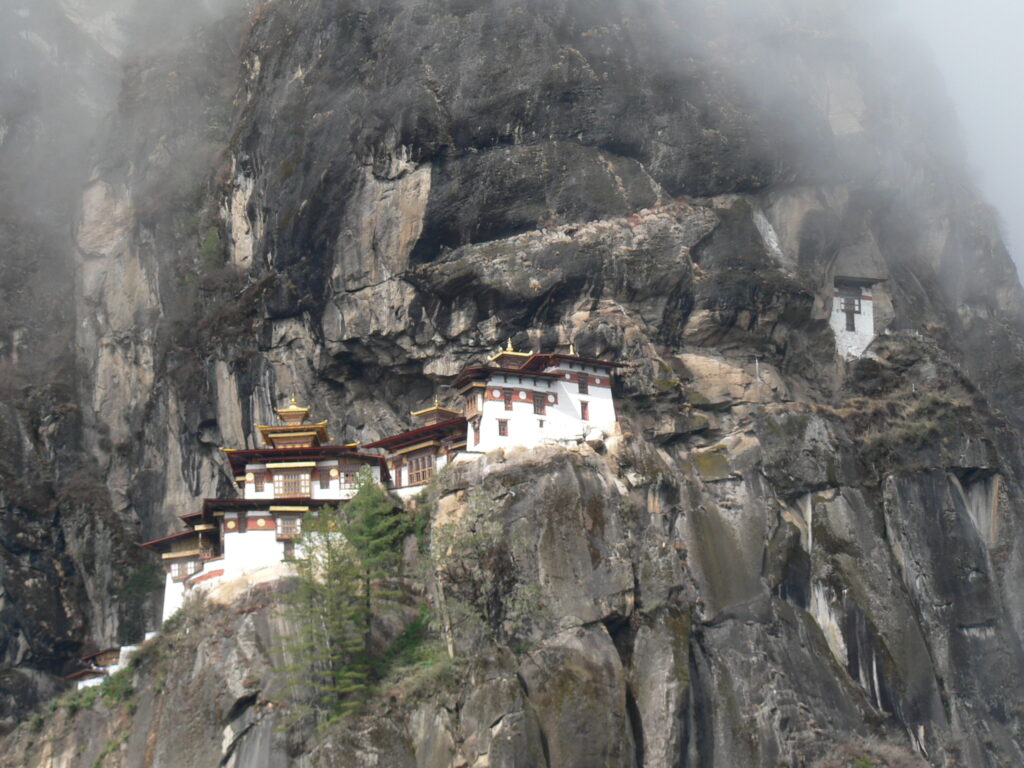
Perched dramatically on a sheer cliff 900 meters above Paro Valley, Tiger’s Nest Monastery is Bhutan’s most iconic landmark and a symbol of its spiritual heritage. Legend says Guru Rinpoche flew here on the back of a tigress to subdue local demons and meditate, making it one of the country’s holiest pilgrimage sites.
Reaching the monastery requires a challenging but rewarding 2–3 hour hike through pine forests and ridges adorned with fluttering prayer flags. Along the way, viewpoints offer breathtaking glimpses of the monastery clinging to the rock face. Whether you climb for the spiritual significance, the views, or the experience itself, visiting Taktsang is an unforgettable highlight of any journey to Bhutan.
Dochula Pass
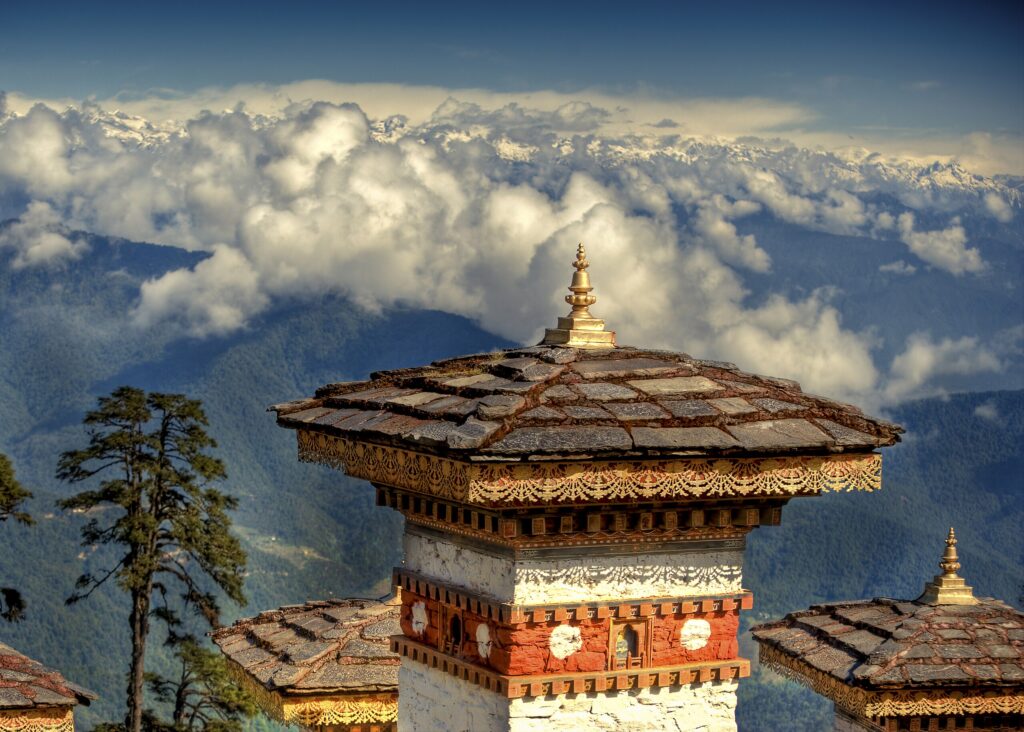
Situated at 3,100 meters between Thimphu and Punakha, Dochula Pass is one of Bhutan’s most scenic stops. On clear days, the pass rewards travelers with sweeping views of the snowcapped Eastern Himalayas, including peaks soaring above 7,000 meters.
The site is also deeply symbolic, marked by 108 whitewashed chortens (stupas) built in memory of Bhutanese soldiers who lost their lives in conflict. Prayer flags flutter in the mountain breeze, adding to the spiritual atmosphere. Many travelers pause here not only for the views but also for a moment of reflection, making it both a natural and cultural highlight of the journey.
Chele La Pass
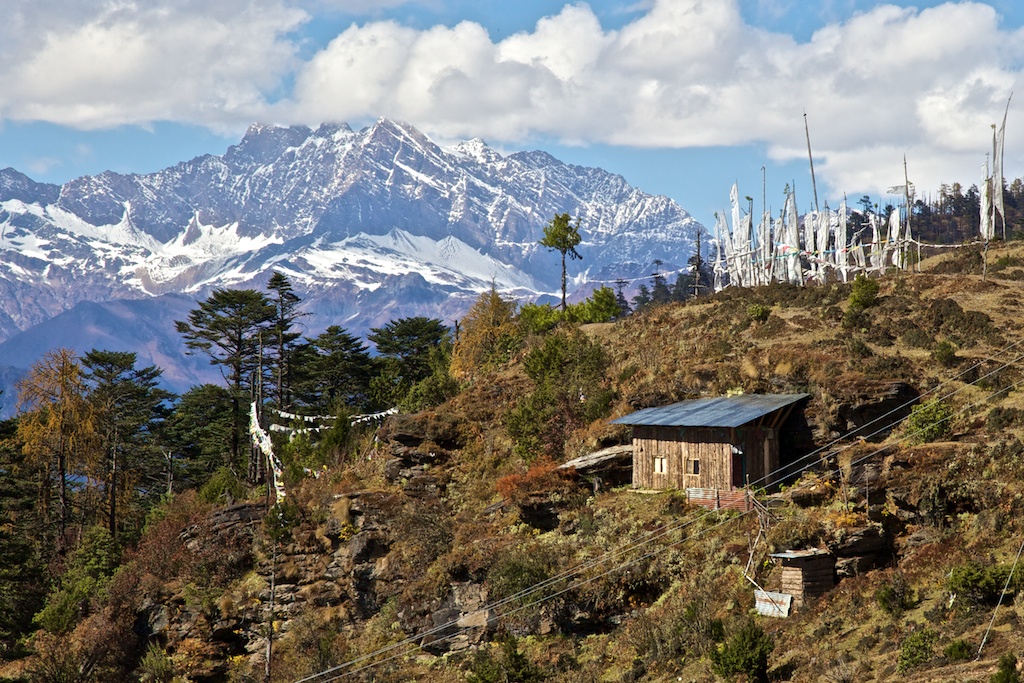
At 3,988 meters, Chele La is one of Bhutan’s highest motorable passes, connecting the Paro and Haa valleys. The drive itself is an adventure, winding through dense forests of rhododendron and hemlock before opening up to dramatic mountain scenery. On clear days, the pass offers spectacular views of Mount Jomolhari (7,326 m) and other Himalayan giants.
The ridge is often draped with thousands of colorful prayer flags, creating a vibrant contrast against the snowy peaks and blue sky. It’s also a popular spot for short hikes, birdwatching, and photography. For many travelers, a trip to Chele La combines accessibility with a true sense of Bhutan’s high-altitude spirit.

Dagala Thousand Lakes Trek
The Dagala Thousand Lakes Trek is one of Bhutan’s most rewarding moderate hikes, usually completed in 5–6 days. Starting near Thimphu, the route takes you through high ridges, rhododendron forests, and remote yak herder settlements. The highlight is the scattering of pristine alpine lakes, each reflecting the surrounding peaks like natural mirrors. In spring and summer, the meadows come alive with wildflowers, adding even more color to the landscapes.
What makes this trek special is the sheer variety along a relatively short route. From sweeping views of Bhutan’s highest peaks to glimpses of Mount Everest and Kanchenjunga on clear days, the trek balances cultural encounters with natural beauty. Nights are usually spent camping near the lakes, under some of the clearest skies in the Himalayas – perfect for stargazing after a day of exploration.
Druk Path Trek
The Druk Path Trek is Bhutan’s most popular short trek, taking 5–6 days to connect Paro and Thimphu through forests, high ridges, and alpine lakes. The route passes ancient dzongs, ruined fortresses, and remote monasteries, offering both cultural depth and mountain scenery. Along the way, trekkers cross passes above 4,000 meters, where views of peaks like Mount Jomolhari and Gangkar Puensum open up.
Because the trek is relatively short and not overly difficult, it’s perfect for those new to Himalayan trekking. Campsites are often set beside scenic lakes or in clearings with panoramic views, and the trail provides a mix of adventure, history, and accessibility. It’s an ideal introduction to Bhutan’s landscapes for travelers seeking both nature and culture without committing to a longer expedition.
Hidden Gems in Bhutan
Haa Valley
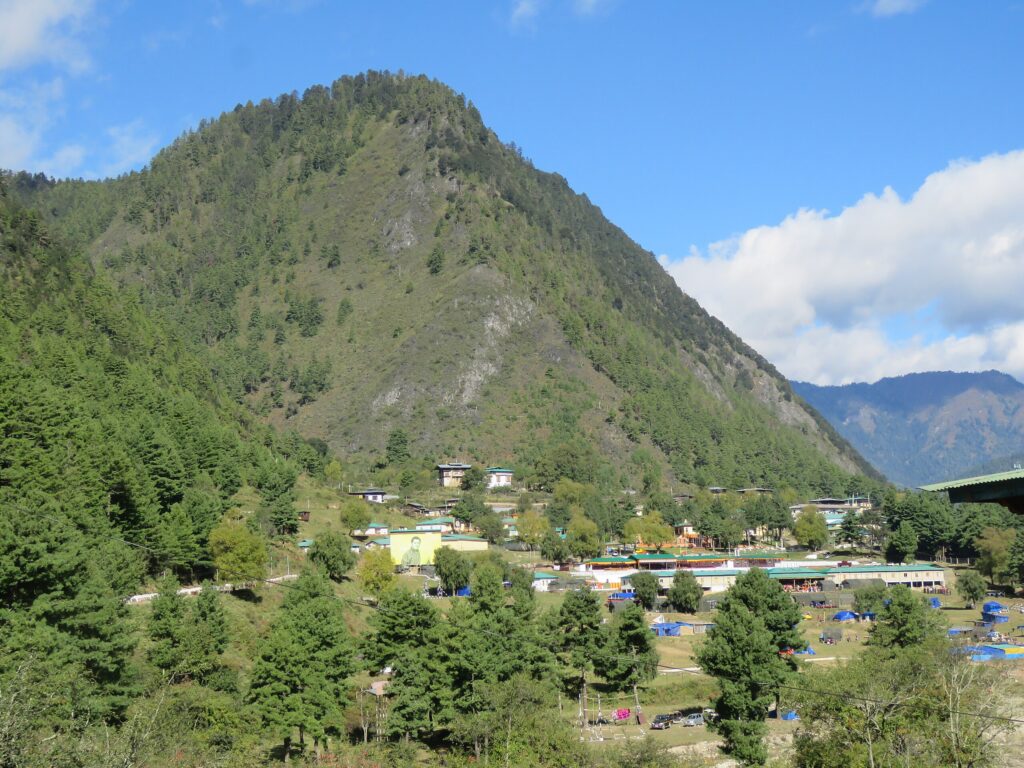
Hidden between mountain ranges near Paro, the Haa Valley is one of Bhutan’s least-visited but most enchanting regions. Known for its alpine meadows, yak pastures, and traditional farmhouses, the valley feels untouched by modern tourism. The drive here crosses Chele La Pass, one of the highest motorable roads in Bhutan, offering sweeping views of Mount Jomolhari before descending into the valley’s quiet charm.
What makes Haa special is its authenticity. You can stay in family-run homestays, sample local dishes like hoentay (buckwheat dumplings), and explore centuries-old temples such as Lhakhang Karpo and Lhakhang Nagpo, known as the “white” and “black” temples. With few visitors, Haa Valley offers an intimate glimpse into Bhutanese rural life, making it perfect for travelers seeking culture, nature, and serenity away from the main tourist trail.
Lhuentse
Tucked away in northeastern Bhutan, Lhuentse is one of the kingdom’s most remote and spiritual districts. The journey here takes you through winding mountain roads and pristine valleys, rewarding the effort with a glimpse of Bhutan at its most authentic. The region is famous for its intricate weaving, particularly the prized kishuthara textiles, still made on traditional looms by local women. Buying directly from the weavers not only supports their livelihood but also connects visitors to Bhutan’s rich artistic heritage.
Lhuentse is also home to the 154-foot Takila Guru Rinpoche statue, one of the tallest of its kind in the world, which gazes protectively across the mountains. Scattered monasteries, sacred sites, and traditional villages make the area a hub of spirituality. For those seeking culture, craftsmanship, and quiet mountain landscapes far from Bhutan’s usual tourist trail, Lhuentse offers an unforgettable experience.
Trashigang & Eastern Bhutan
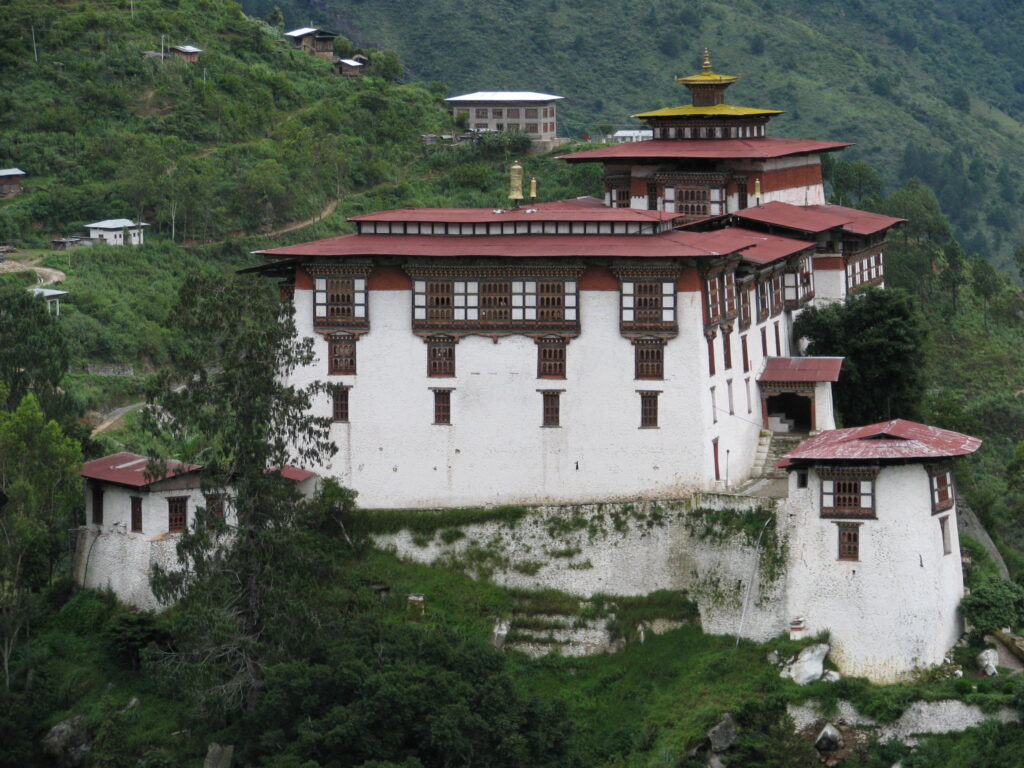
Eastern Bhutan, anchored by the lively town of Trashigang, is a world away from the more visited western valleys. Often called the “Jewel of the East,” Trashigang is famous for its impressive dzong perched dramatically on a cliff, as well as its bustling market that draws highland traders from Merak and Sakteng. The region hosts colorful tsechu festivals, where masked dances and traditional music bring Bhutanese spirituality vividly to life.
Beyond the town, Eastern Bhutan reveals a wilder, more authentic side of the country. The road to Mongar winds through rugged mountains and deep gorges, while remote villages preserve age-old weaving traditions and customs. Treks to places like Sakteng Wildlife Sanctuary offer encounters with rare flora, fauna, and semi-nomadic Brokpa communities. With fewer tourists venturing this far, the east feels raw, welcoming, and full of cultural surprises.
Tang Valley (Bumthang)
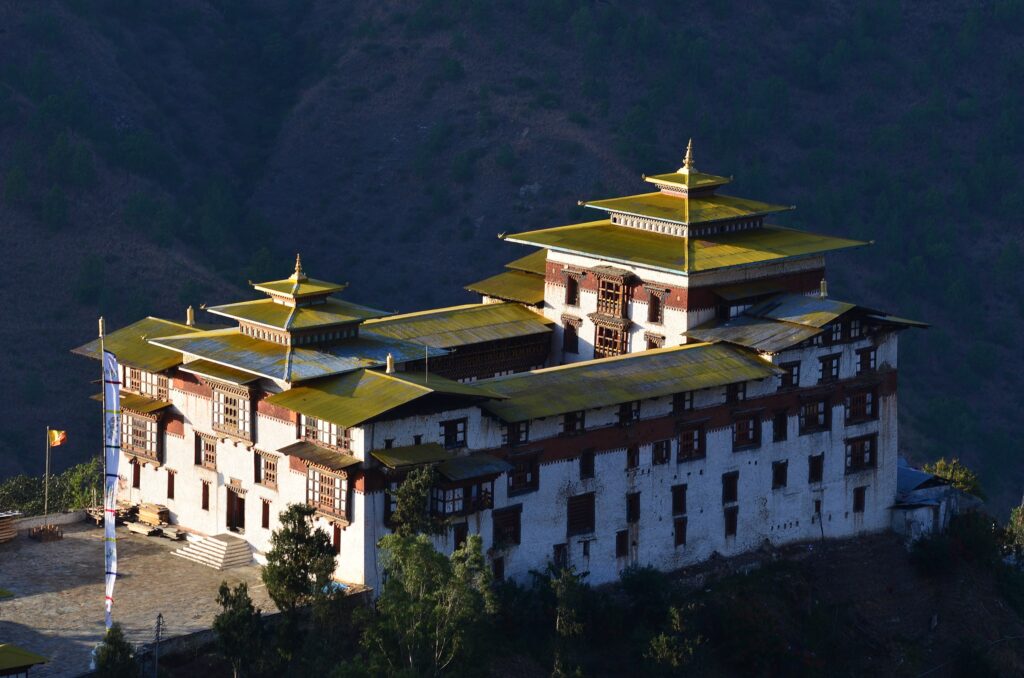
Tang Valley is the most secluded of Bumthang’s four valleys, offering a peaceful escape into Bhutanese rural life. Unlike the busier Choekhor Valley, Tang remains quiet and traditional, with villages surrounded by barley fields, yak pastures, and pine forests. Staying in local farmhouses gives visitors the chance to experience warm Bhutanese hospitality, simple home-cooked meals, and the rhythms of daily life in the highlands.
Travel Tips
Best Time to Visit Bhutan
- Spring (Mar–May): Blooming rhododendrons, mild weather, and festivals.
- Autumn (Sep–Nov): Clear skies, ideal trekking, and major tsechus.
- Winter (Dec–Feb): Fewer tourists and tranquil valleys; cold at higher altitudes.
- Summer (Jun–Aug): Green landscapes but heavy rain; not the best for trekking.
Visa & Entry
Visiting Bhutan is a unique experience because the country carefully controls tourism to preserve its culture and environment. All foreign travelers – except citizens of India, Bangladesh, and the Maldives – must arrange their trip through a licensed Bhutanese tour operator. This system ensures that every journey is well-organized and sustainable.
A mandatory Sustainable Development Fee (SDF) is included in the tour package, covering accommodation, meals, a guide, and transportation. Instead of applying for a visa independently, visitors receive a visa clearance letter issued in advance, which is then verified on arrival. This structured process makes travel in Bhutan smooth while maintaining the kingdom’s focus on “high value, low impact” tourism.
Currency & Language
The national currency is the Bhutanese Ngultrum (BTN), which is pegged to and interchangeable with the Indian Rupee. While Dzongkha is the official language, English is widely spoken in schools, government institutions, and the tourism sector, making communication relatively easy for visitors.
Transportation
Bhutan’s mountainous terrain means that travel is part of the adventure. The country has no railway system, so most journeys are made by car, usually with a driver-guide included in tour packages. Roads wind through valleys and over high passes, offering breathtaking views but requiring patience for long drives.
For longer distances, domestic flights link Paro with Bumthang and Yonphula, significantly reducing travel time compared to road journeys. Renting a vehicle for self-drive is not common, and those who wish to do so must hold an International Driving Permit along with their national license. However, due to road conditions, most travelers find it more comfortable and safe to rely on local drivers provided by tour operators.

Published August 17, 2025 • 12m to read