

Why Does a Car Need a Road Flare?
Picture this: you’re stranded on the side of a freeway in a broken-down car, surrounded by thick fog. Cellular signal is weak, visibility is near zero, and oncoming traffic can’t see you. This scenario is far more common than most drivers realize — and a road flare could save your life. In this guide, we’ll break down what automotive pyrotechnic devices are, why Japanese cars come factory-equipped with them, and exactly how to use one safely and effectively.
The Japanese Origin of the Automotive Road Flare
Japan’s geography and climate make it one of the foggiest countries in the world. Dense fogs, heavy snowfall, and low-visibility conditions are regular driving hazards — which is exactly why Japan became the pioneer of the mandatory road flare. The country’s law requires every passenger car to carry a pyrotechnic signal device, and automakers comply by installing one at the factory level.
Here are some key facts about how Japanese road flares are integrated into vehicles:
- Every Japanese car comes factory-equipped with a road flare as standard safety gear.
- The flare is mounted next to the driver — specifically near the left foot in right-hand drive vehicles — so it’s always within immediate reach.
- Japanese law prohibits storing the flare in the glove compartment or trunk; it must be accessible at all times.
- The device is also known as a fusee or, less accurately, a signal pistol.
- This level of mandatory factory integration is unique to Japan — American and European vehicles do not include road flares as standard equipment.
Why Every Driver Should Carry an Emergency Road Flare
Modern cars are equipped with horns, headlights, and hazard lights — so why carry automotive pyrotechnics? Because in a real emergency, your car’s built-in systems can fail or simply not be enough.
Consider these scenarios where a road flare becomes essential:
- Battery damage after a crash — headlights and hazards become useless if the battery is knocked out.
- Low-visibility conditions — in fog, snow, or rain, standard car lights blend into the background noise of traffic.
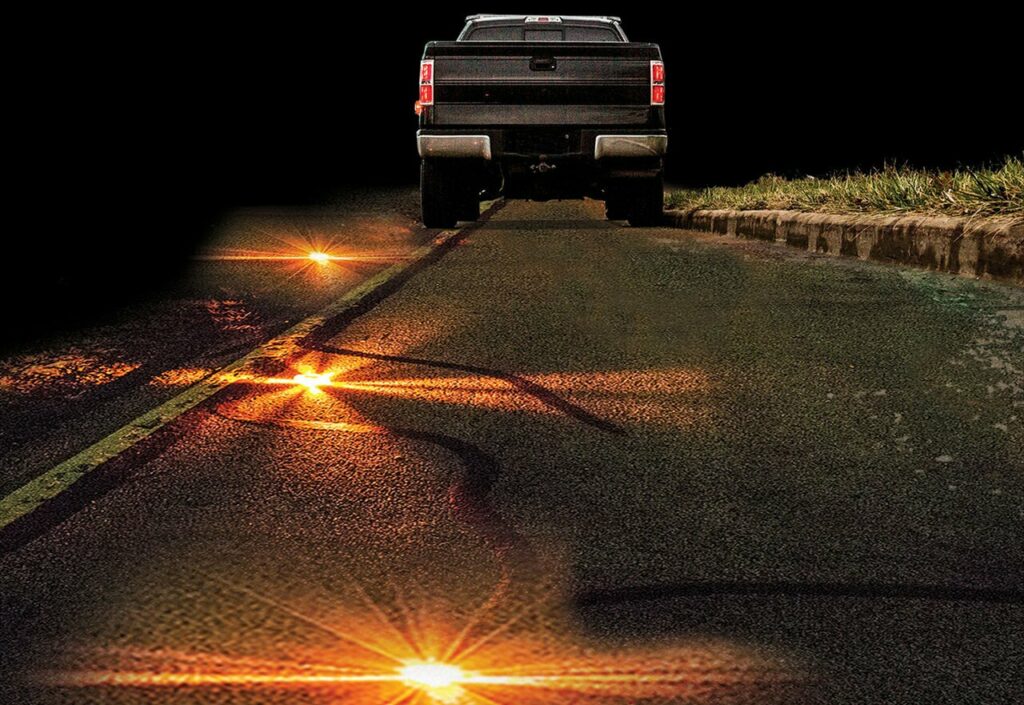
- Remote or rural locations — a bright flare is visible from a much greater distance than a waving hand or reflective triangle.
- Wildlife deterrence — a burning flare can scare away wild animals if you break down in a remote or wooded area.
- Underwater visibility — certain flare types continue burning even submerged in water, marking the location of a vehicle that has gone off-road into a body of water.
A person holding a bright-burning flare commands immediate attention — far more effectively than waving a scarf or activating a car alarm. That’s why automotive signal pyrotechnics remain a critical safety tool even in the age of smartphones and GPS.
How to Use a Road Flare: Step-by-Step Instructions
Using a road flare correctly is simple, but there are important steps to follow — especially under stress. Here’s a clear breakdown:
Before You Ignite
- Check the expiration date — road flares typically have a shelf life of around five years from the production date.
- Never use an expired flare — it can behave unpredictably or fail to ignite entirely.
- Make sure you’re outside the vehicle before lighting — flares should never be ignited inside a car.
Understanding the Design
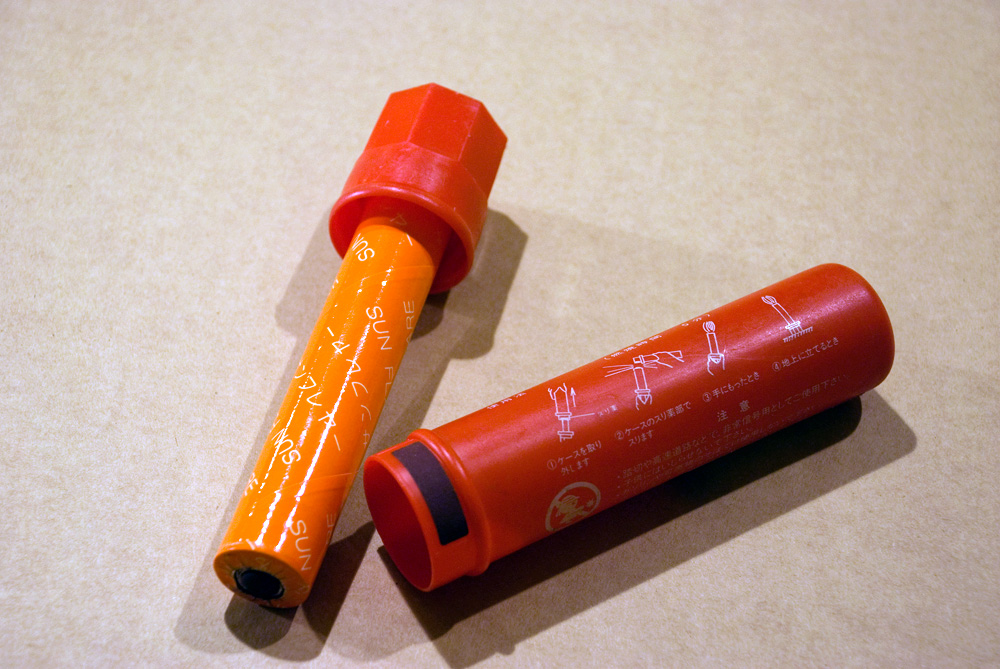
A Japanese road flare is cylindrical and housed in a soft red polyethylene case. Inside is a two-layer plastic-cardboard tube filled with a chemical fuel charge. Once ignited, the chemicals produce a bright red glow. Key components include:
- A red polyethylene outer case for weather resistance and visibility.
- A tube-turned-handle — remove it from the body to create a grip for holding the flare safely.
- A phosphorus ignition head on the cap — no matches or lighter needed.
- A steel window-breaker tip under the cap at the base of the flare (more on this below).
- A graphic instruction label printed on the body — no Japanese language knowledge required.
Lighting the Flare
- Remove the tube-case from the flare body and hold it as a handle.
- Hold the flare in your outstretched right hand.
- With your left hand, remove the lid, flip it, and scratch it against the phosphorus ignition head — similar to striking a match.
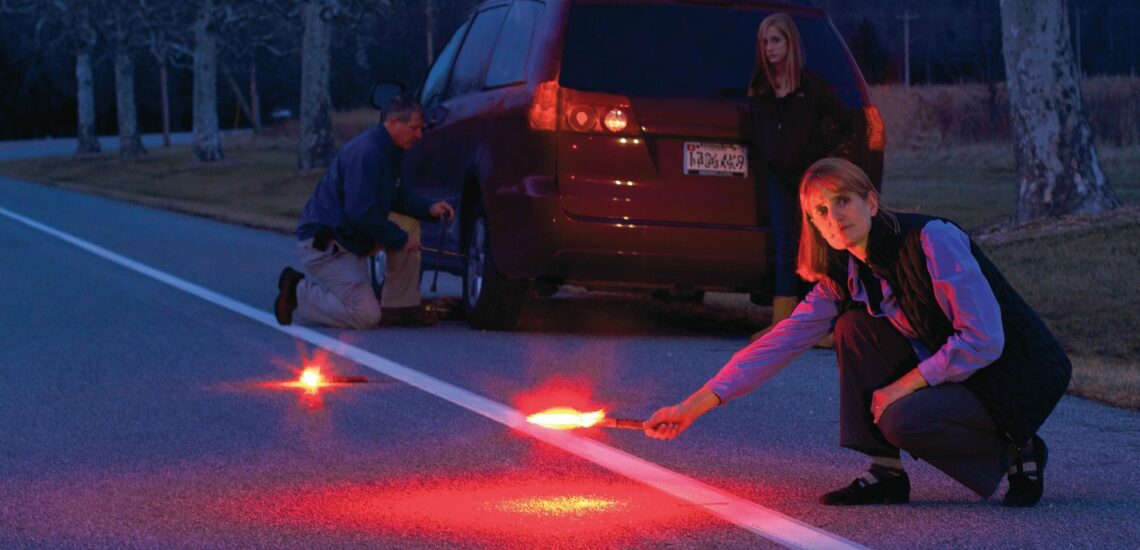
- Once lit, hold the flare at a 45-degree angle downwind, or horizontally, to prevent burning sparks from falling on you.
- If there’s snow on the ground, you can push the base into a snowdrift to hold it in place and free your hands.
The flare burns a bright red for over five minutes. Some models continue burning even underwater, giving you a reliable signal window even in extreme conditions.
What to Do If You’re Trapped Inside the Car
Some accidents cause doors to jam and window mechanisms to fail, making it impossible to exit the vehicle. Japanese road flares are designed for this situation too. At the base of the flare, beneath a removable cap, there is a sharp steel tip that functions as a window breaker.
- Use the steel tip like a pike to shatter tempered car glass with a single strike to the corner of the window.
- Once the window is broken, you can extend your arm and signal with the burning flare even while still inside the vehicle.
- If the car has gone into water, the flare will continue burning even when submerged, marking the vehicle’s location for rescuers.
Common Problems and Safety Warnings
Road flares are highly effective — but only when properly maintained and handled correctly. Be aware of these important risks:
- Moisture damage: The flare casing is not fully sealed, so in high-humidity environments, moisture can seep in and compromise ignition and burn time. Store flares in dry conditions when possible.
- Heat exposure: A road flare left in a car during hot summer days — especially in a sun-exposed parking lot — can overheat and ignite spontaneously, potentially causing a fire inside the vehicle.
- Never hold vertically when lit: Holding an active flare straight up causes burning sparks to fall onto your hands and clothing, which can result in burns or ignite fabric.
- Never rely on an expired flare: Outdated flares are unpredictable — they may fail to ignite, burn weakly, or in some documented cases, ignite on their own without warning.
- Never light inside the vehicle: A burning flare produces smoke and intense heat. Always ignite and use it outdoors.
Japanese automakers take these standards seriously. Factory regulations specify not only the flare’s technical performance requirements but also precisely how and where it must be mounted in the vehicle. Replacing your flare before its expiry date is a small investment in your own safety — a new Japanese road flare typically costs less than $10.
Japanese vs. Chinese and Russian Road Flares: What’s the Difference?
While Japan pioneered the automotive road flare, similar devices are also produced in China and Russia. The core function is the same, but the ignition mechanism differs:
- Japanese flares use a phosphorus cap that you scratch against an ignition head — similar to a match.
- Chinese and Russian flares use a pull-cord mechanism: a threaded cord with a ring at the end is built into the body. Pull the ring and the flare ignites instantly.
The pull-cord design has a practical advantage in emergency situations: it requires less fine motor coordination. Removing a lid, flipping it, and precisely striking a phosphorus head can be challenging under stress, in the dark, or in deep snow where dropping a small cap means losing it. Pulling a ring is faster and more foolproof.
Drive Prepared: Don’t Forget Your Documents Either
Every time you get behind the wheel, it’s worth doing a quick safety check — and that includes more than just your road flare. Make sure you also have your driver’s license on hand. If you travel internationally, a national license alone may not be enough. An international driver’s license is far more versatile, allowing you to legally drive in most countries around the world. You can get yours processed quickly and conveniently directly on our website — no extra time wasted, full global driving coverage secured.

Published March 18, 2021 • 7m to read