
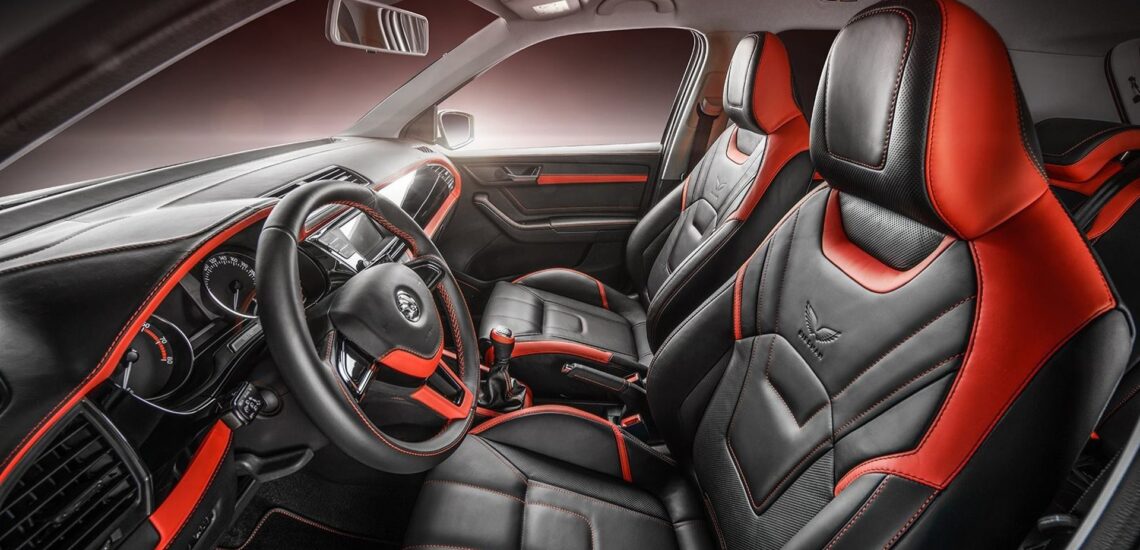


The desire to personalize a car’s interior emerged almost as soon as cars themselves did. Some drivers crave comfort and luxury, while others prefer a minimalist cockpit. Either way, there is enormous scope for upgrading your car’s interior to make it uniquely yours. In this article, we walk you through the most popular car interior tuning options — from noise insulation and surface wrapping to premium seat materials like Alcantara.
What Does Car Interior Tuning Involve?
Every car owner wants their vehicle to stand out — not just on the outside, but inside too. A well-tuned interior should feel unique, comfortable, and personal. While racing drivers strip their cabins to save weight, most motorists want the opposite: a warm cabin in winter, cool air in summer, and ergonomic comfort for both driver and passengers.
In practice, car interior tuning covers a range of improvements — either individually or as a complete makeover:
- Resurfacing interior panels with premium materials such as genuine leather, eco-leather, or Alcantara
- Installing LED ambient lighting or other cabin lighting upgrades
- Customizing the gear shift knob and steering wheel design
- Fitting stylish seat covers and headrests
- Adding comfort-enhancing devices (heated seats, ventilation, lumbar support)
- Applying protective solutions against sunlight (curtains, sun visors), road noise (sound insulation), and vibration
Any combination of the above will make your car more original and give its interior real character. That said, moderation is key — overdoing it in terms of colors or materials can easily backfire. Always consider the overall color palette and the quality of materials together. And remember: interior tuning doesn’t have to break the bank. There are budget-friendly options as well as high-end solutions for those who want the full luxury experience.
Where to Start: Noise and Vibration Insulation
Before tackling aesthetics, it’s worth thinking about what kind of transformation you want. If you’re going for a full interior overhaul rather than individual improvements, the best place to start is vibration and sound insulation. A quieter cabin immediately makes driving more comfortable for everyone inside.
Here’s how a proper insulation job typically works:
- Purchase specialized insulation materials from a reputable car audio or tuning supplier.
- Fully disassemble the car interior and remove the existing upholstery and old insulation.
- Line the inner body surfaces with multiple layers of vibration-damping material to reduce road vibration.
- Mount a sound-deadening layer on top — again, in multiple layers for maximum effect.
- Pay close attention to hard-to-reach areas. Even a 3 mm gap can completely neutralize the effect of all your insulation work.
- Use high-quality seals when reassembling the interior to ensure a tight fit between all trim elements.
Take your time with this step — it is the foundation for everything that follows.
Upgrading Smooth Interior Surfaces
Most modern cars come from the factory with inexpensive plastic interiors, which can look dull and generic. Upgrading those smooth surfaces — door panels, center consoles, floor trims — is one of the most cost-effective ways to transform the look of your cabin. The easiest approach is vinyl or carbon-fiber film, which convincingly imitates premium materials at a fraction of the cost.
Applying film requires patience and precision. Follow these steps for a clean result:
- Measure the parts carefully and cut the film to size.
- Clean the surface thoroughly and degrease it completely.
- Apply the film and smooth it from the center outward using a soft squeegee or spatula.
- Use a heat gun or hair dryer to stretch the film around curves and edges without bubbles.
The color range for vinyl film is virtually limitless, so you can mix and match different finishes across interior panels. The main drawback is durability — film is not fire-resistant and wears out more quickly than natural materials. For a longer-lasting result, consider stepping up to eco-leather, Alcantara, or genuine leather. Full leather interior work is a premium, time-intensive option: any damage requires professional repair rather than a simple film replacement, but the end result is unmatched in quality and feel.
Ideally, surface upgrades should be done in parallel with the noise and vibration insulation work, so that the entire interior can be reassembled in one go.
Another increasingly popular technique for interior surfaces is flocking — read on to find out more.
Flocking: A Unique Finish for Interior Panels
Flocking is a finishing technique that applies short textile fibers (known as flock) to interior surfaces, creating a soft, velvet-like texture. It’s a great way to give your cabin a distinctive, tactile feel that stands apart from standard plastic or vinyl. Flocked surfaces are pleasant to the touch, resistant to fading, and highly moisture-resistant.
The flocking process involves the following steps:
- Clean and degrease the surface thoroughly.
- Apply a specialized primer and allow it to dry.
- Sand the surface lightly with fine-grit sandpaper for better adhesion.
- Perform a dry anti-dust clean to remove any particles.
- Apply an even layer of adhesive glue.
- Use a flocking applicator (floater) to distribute the flock fibers evenly across the surface.
- Remove any excess flock with a hair dryer once the adhesive has set.
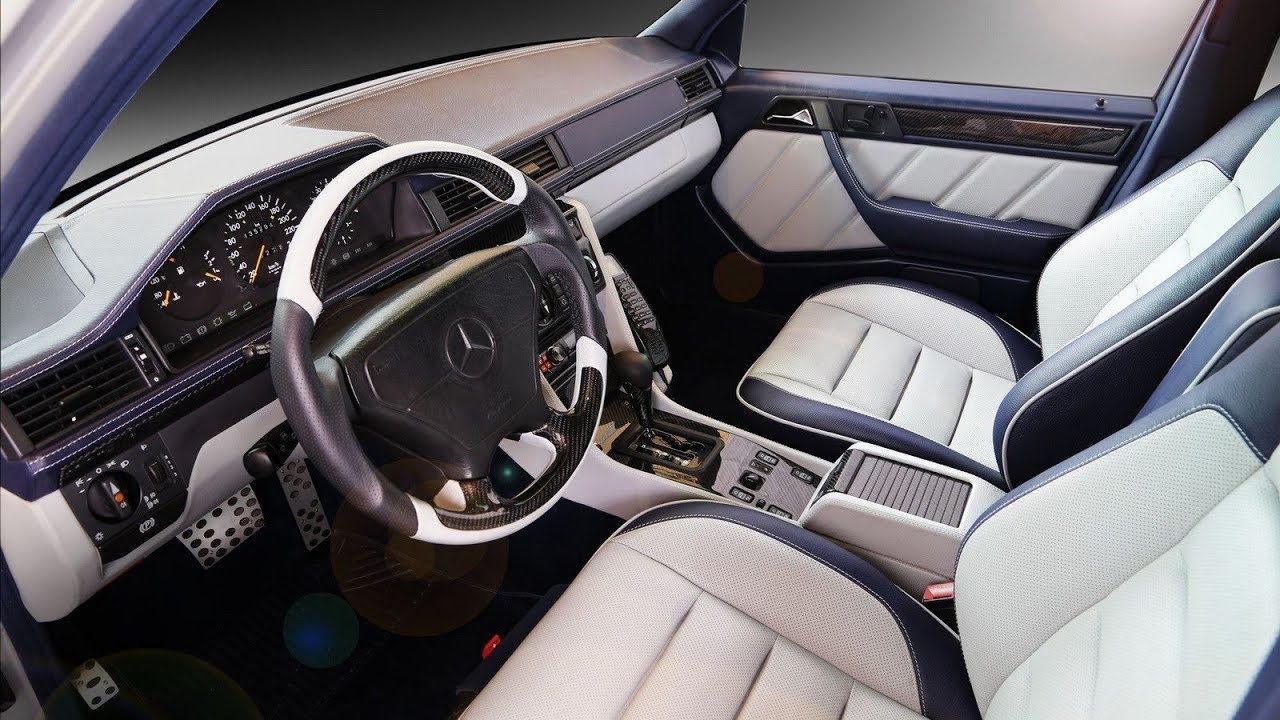
The car ceiling, however, is typically lined with carpet rather than flock or vinyl film — a practical, affordable, and widely used approach that deserves a dedicated look of its own.
Car Seat Upgrades: The Most Impactful Interior Tuning Option
Seat upgrades are by far the most popular form of car interior tuning. The seats are what you and your passengers interact with on every journey, so the material, fit, and feel make a huge difference. Drivers have plenty of options depending on their budget and taste:
- Jacquard — a woven fabric with attractive patterns, often used in mid-range seat covers
- Velour — soft and plush, offering a comfortable and affordable upgrade
- Eco-leather — versatile, durable, easy to clean, and available in a wide range of colors
- Genuine leather — the premium choice, offering the best look and longevity
- Combination upholstery — for example, eco-leather paired with Alcantara, or velour with suede panels
If you’re driving a budget car and can’t yet upgrade to full new seats, custom-made covers are an excellent and widely favored alternative. Specialist workshops can craft covers in almost any material and color combination, including natural fur if you’re feeling bold.
Why Choose Alcantara for Your Car Interior?
For car enthusiasts who want the very best, Alcantara is the finishing material of choice. This high-end artificial suede — made from ultra-fine microfibers — offers a refined, premium feel that rivals genuine leather. It’s soft to the touch, easy to maintain, and remarkably durable. Alcantara is used extensively in sports cars, luxury vehicles, and high-performance interiors.
Key properties of Alcantara include:
- Elasticity and flexibility
- Exceptional durability and wear-resistance
- Hypoallergenic composition
- High hygroscopicity (moisture absorption and release)
- Fire resistance — it is non-combustible
- Easy to clean and resistant to dirt and external staining
Alcantara comes in three main variants:
- Pannel — a dense, backing-free material primarily used to cover dashboards and hard interior panels
- Cover — features a textile backing and is the standard choice for seat upholstery
- Perforated Alcantara — used decoratively and for seat covers where increased airflow and breathability is desired
Alcantara seat covers are machine-washable, but regular dry or wet cleaning is usually sufficient. To keep Alcantara looking its best over the long term, follow these simple care guidelines:
- Vacuum the seats, floor, panels, and ceiling at least once a week
- Keep alcohol-free wet wipes in the car to deal with fresh spills immediately
- Never smoke inside the car — Alcantara absorbs and retains tobacco odors
- After wet or dry cleaning, ventilate the cabin to remove any residual cleaning product smell
- Dry Alcantara promptly after it gets wet, as the material is highly hygroscopic
- When machine washing covers, select a delicate program with a medium spin speed — do not bleach

We’ll be covering more specific interior upgrades — lighting, steering wheel customization, and dashboard refinishing — in dedicated articles. And since great drives often take you across borders, it’s worth making sure your paperwork is in order too. If you don’t yet have an international driver’s license, you can apply for one quickly and easily on our website.

Published December 24, 2020 • 7m to read