

Tunisia is famous for Carthage, Roman ruins, Mediterranean beaches, the medinas of Tunis and Sousse, Kairouan, Djerba, the Sahara Desert, Star Wars filming locations, harissa, couscous, olive oil, and the Jasmine Revolution. It is one of the most historically layered countries in North Africa: small in size, but connected with Phoenician trade, Roman Africa, early Islamic civilization, Ottoman and French influence, modern beach tourism, and the political shockwave of the Arab Spring. Britannica describes Tunisia as a North African country between Algeria and Libya, with a Mediterranean coastline and access to the Sahara.
1. Carthage
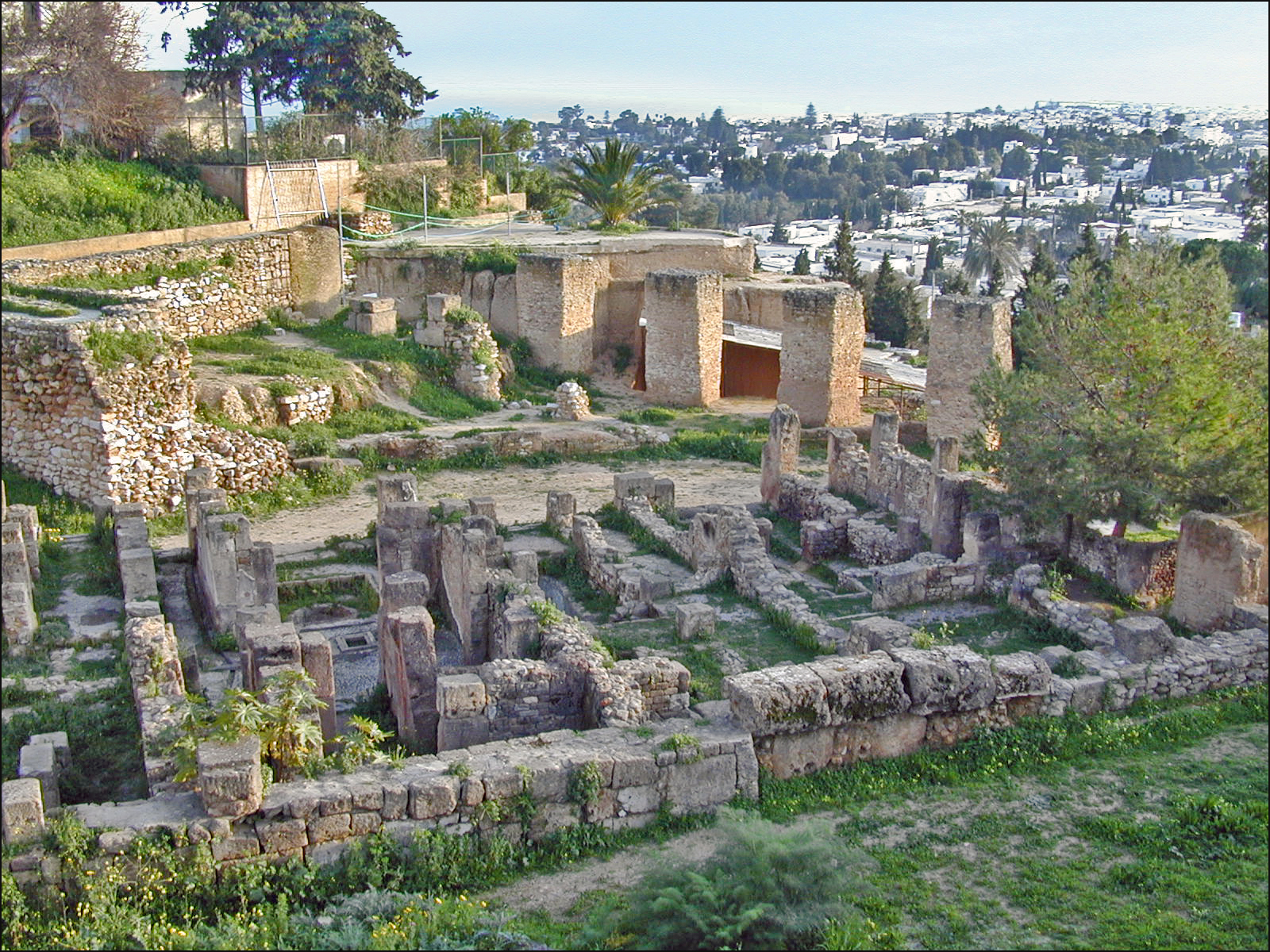
On the hills above the Gulf of Tunis, Carthage gives Tunisia one of its strongest links to the ancient Mediterranean. Traditionally founded by Phoenician settlers from Tyre in the 9th century BC, the city grew into the centre of a maritime trading empire with ports, colonies, fleets, temples, workshops, and commercial routes stretching across North Africa, Sicily, Sardinia, Spain, and beyond. Its rivalry with Rome ended brutally in 146 BC, when the city was destroyed at the end of the Third Punic War, but Carthage did not disappear from history.
Hannibal gives Carthage its most famous human face. During the Second Punic War, he led Carthaginian forces against Rome and crossed the Alps in 218 BC with an army that became one of the most legendary military campaigns of antiquity. That story makes Carthage more than an archaeological suburb of Tunis: it is tied to trade, empire, war, destruction, rebirth, and one of the greatest rivalries in ancient history.
2. The Medina of Tunis
Its roots go back to the early Islamic period, and over the centuries it grew around religious, commercial, residential, and craft spaces rather than a single grand avenue. The Medina of Tunis has been on the UNESCO World Heritage List since 1979 and contains about 700 historic monuments, including mosques, madrasas, palaces, mausoleums, fountains, gates, souks, and old family houses. At its heart stands the Zitouna Mosque, surrounded by streets where trade, worship, learning, and domestic life shaped the city’s structure for more than a thousand years.
What makes the medina important is its density. The old city does not present Tunisian history as one monument after another; it folds that history into doors, courtyards, market lanes, workshops, rooflines, and neighbourhoods where public and private life are closely layered. Its strongest period of growth came under powerful medieval dynasties, especially when Tunis became one of the major cities of the Maghreb between the 12th and 16th centuries.
3. Sidi Bou Said
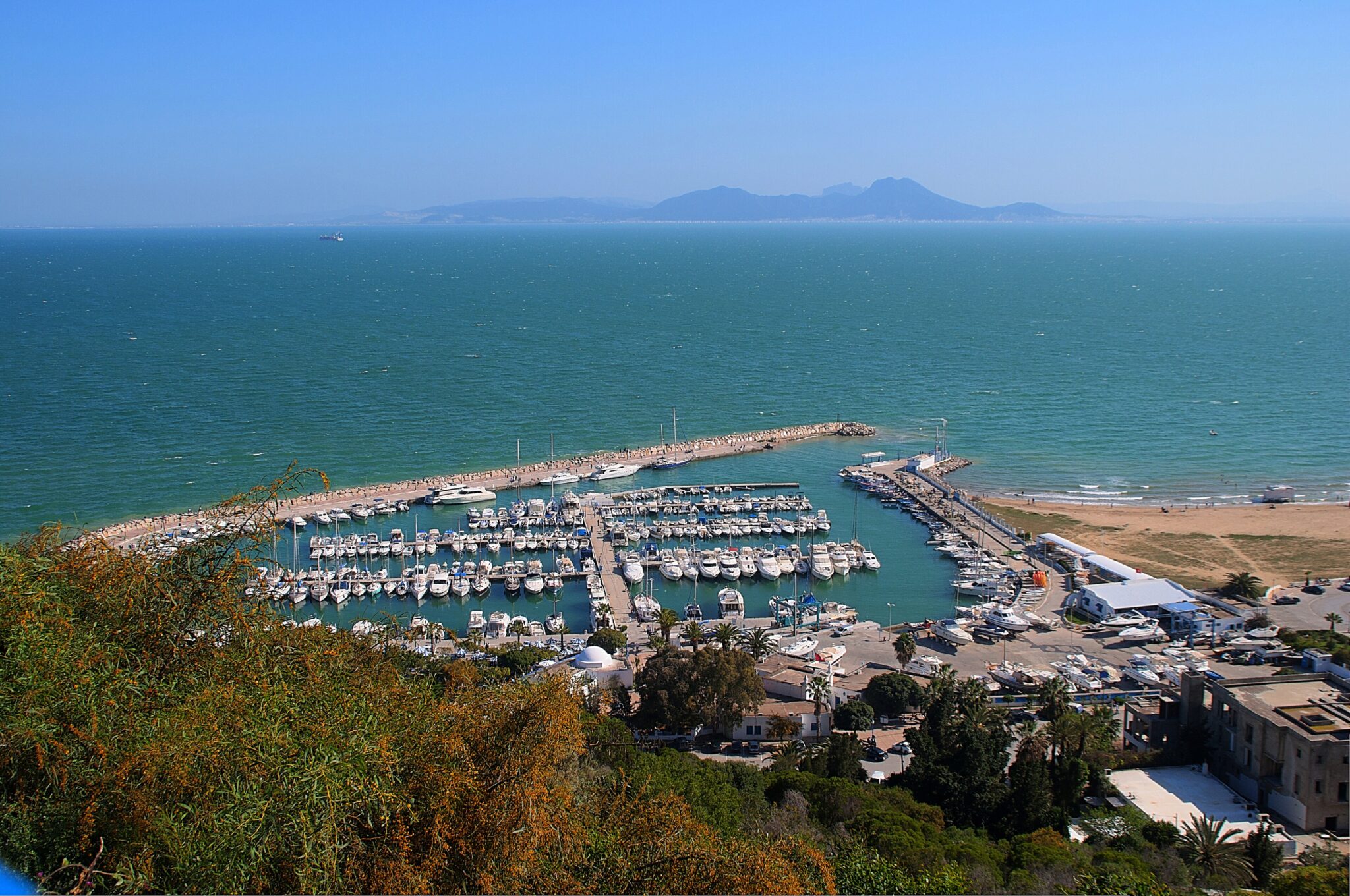
A short ride from Tunis and Carthage, Sidi Bou Said sits above the Gulf of Tunis with the confidence of a village that knows exactly how it looks. Its white walls, blue doors, window grilles, arched entrances, and steep lanes create one of Tunisia’s clearest visual signatures, but the place is more than a pretty coastal backdrop. The village grew around the tomb of the Sufi figure Abu Said al-Baji, who died in the 13th century, and later attracted wealthy Tunis families who built summer residences there. By the early 20th century, it had also become linked with artists, writers, music, and elite seaside leisure.
The blue-and-white image became especially strong after Baron Rodolphe d’Erlanger settled there and helped shape its architectural identity; his palace, Ennejma Ezzahra, is now connected with Tunisia’s Arab and Mediterranean musical heritage. That artistic layer makes Sidi Bou Said different from heavier historic sites such as Carthage or Kairouan. It is famous because it gives Tunisia a softer Mediterranean face: cafés above the sea, carved doors, bougainvillea, balconies, old houses, gallery-like streets, and views that turn the coast into part of the architecture.
4. Kairouan
Founded in 670 by the Arab general Uqba ibn Nafi, Kairouan became one of the earliest and most influential Islamic centres in North Africa. From this inland city, Arab-Muslim rule, scholarship, architecture, and religious life spread across much of the Maghreb. Its importance is still visible in the old walls, narrow streets, reservoirs, madrasas, zaouias, traditional houses, and especially the Great Mosque of Kairouan. Although the mosque’s origins go back to the 7th century, much of its present form reflects later Aghlabid work from the 9th century, including its powerful courtyard, hypostyle prayer hall, and square minaret.
Kairouan gives Tunisia a historical weight that is different from Carthage or the Mediterranean coast. Carthage connects the country with Phoenician and Roman antiquity; Kairouan connects it with the rise of Islamic civilization in North Africa. The city was added to the UNESCO World Heritage List in 1988, and its old urban fabric still shows why it mattered: religion, education, trade, craftsmanship, and local authority were concentrated behind its walls for centuries.
5. El Jem Amphitheatre
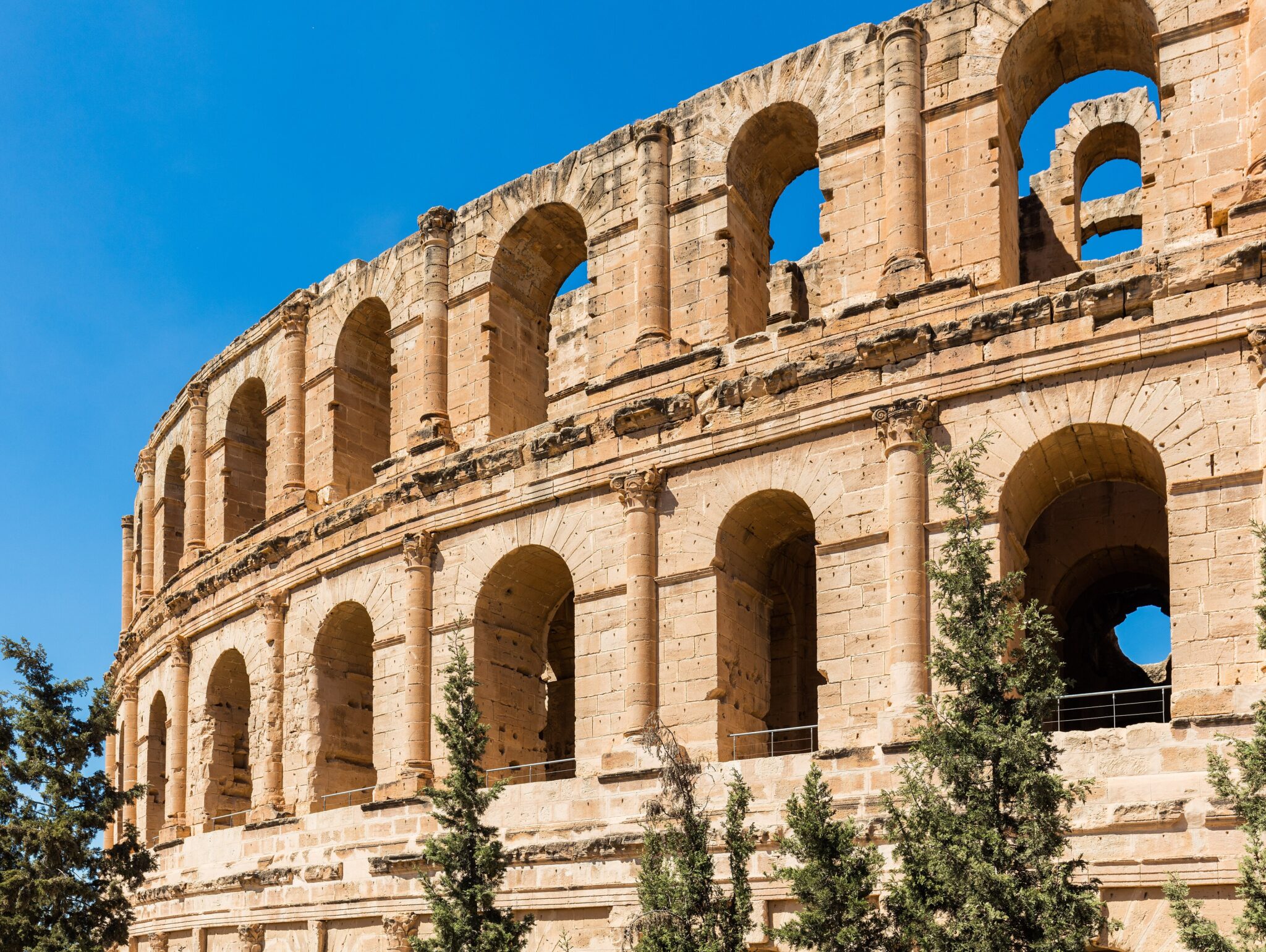
In the small Tunisian town of El Jem, the scale of Roman Africa appears almost unexpectedly: a massive stone amphitheatre rises above modern streets where ancient Thysdrus once stood. Built in the 3rd century AD, when the region was wealthy from agriculture and especially olive oil, the amphitheatre measured roughly 148 by 122 meters and could hold around 30,000 spectators. This is not a ruin hidden in a major capital; it is a vast arena standing in a modest inland town, showing how rich and important Roman North Africa once was. The underground passages, high arcades, tiered seating, and thick stone walls make the building easy to understand even without specialist knowledge: it was designed for crowds, spectacle, movement, and imperial power.
6. Dougga and Roman heritage
A short journey inland from Tunisia’s coast reveals why the country should not be seen only as a beach destination. Dougga, the ancient Thugga, is one of the best-preserved Roman and pre-Roman sites in North Africa, protected by UNESCO since 1997. Its streets, theatre, temples, baths, forum, houses, cisterns, arches, and the Libyco-Punic mausoleum show how several layers of history met in one place: indigenous Numidian roots, Punic influence, Roman urban life, and later Byzantine traces.
Tunisia’s wider Roman heritage is unusually dense for such a compact country. Carthage connects the coast with Punic power and Roman Africa; El Jem shows imperial spectacle on a monumental scale; Bulla Regia is known for its partly underground Roman houses; Sbeitla preserves temples, baths, arches, and early Christian remains in the interior. Together with sites such as Kerkouane, Kairouan, Sousse, Tunis Medina, Djerba, and Ichkeul, Tunisia now has nine UNESCO World Heritage properties.
7. Beach resorts: Hammamet, Sousse and Monastir
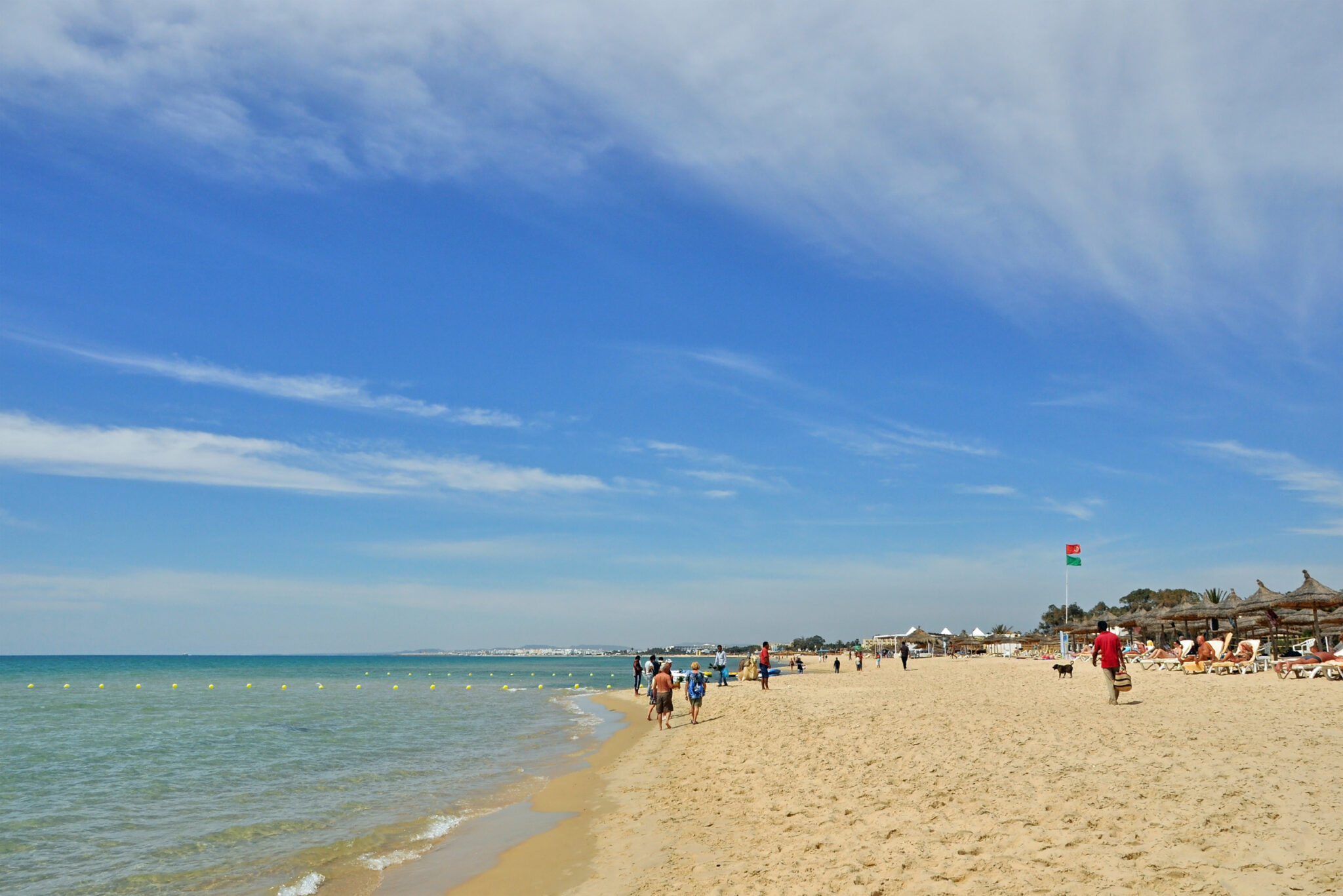
The country has more than 1,100 kilometers of shoreline, and resort towns such as Hammamet, Sousse, Monastir, Mahdia and Djerba turned that coast into one of North Africa’s best-known seaside holiday regions. Hammamet became especially associated with sandy beaches, low white buildings, gardens, hotels, thalassotherapy centres and an old medina facing the sea, while Sousse and Monastir combine resort zones with older urban layers, ports, ribats and easy access to historic sites. This beach image is important because it explains Tunisia’s modern tourism better than archaeology alone. A traveller can spend the morning by the sea, visit a medina or Roman site in the afternoon, and return to a resort hotel by evening – a combination that made the country attractive for European and regional package holidays.
8. Djerba
Djerba feels different from mainland Tunisia because its identity was shaped by island conditions: limited water, dry land, scattered settlements, and a long need for local self-sufficiency. Instead of growing around one dense central city, the island developed a dispersed pattern of villages, farms, mosques, markets, workshops, and religious sites connected by roads across the landscape. This settlement system, with roots around the 9th century, was added to the UNESCO World Heritage List in 2023. It shows how Djerba’s people adapted architecture, agriculture, trade, and community life to a dry Mediterranean island where survival depended on careful use of land and water.
9. The Sahara Desert
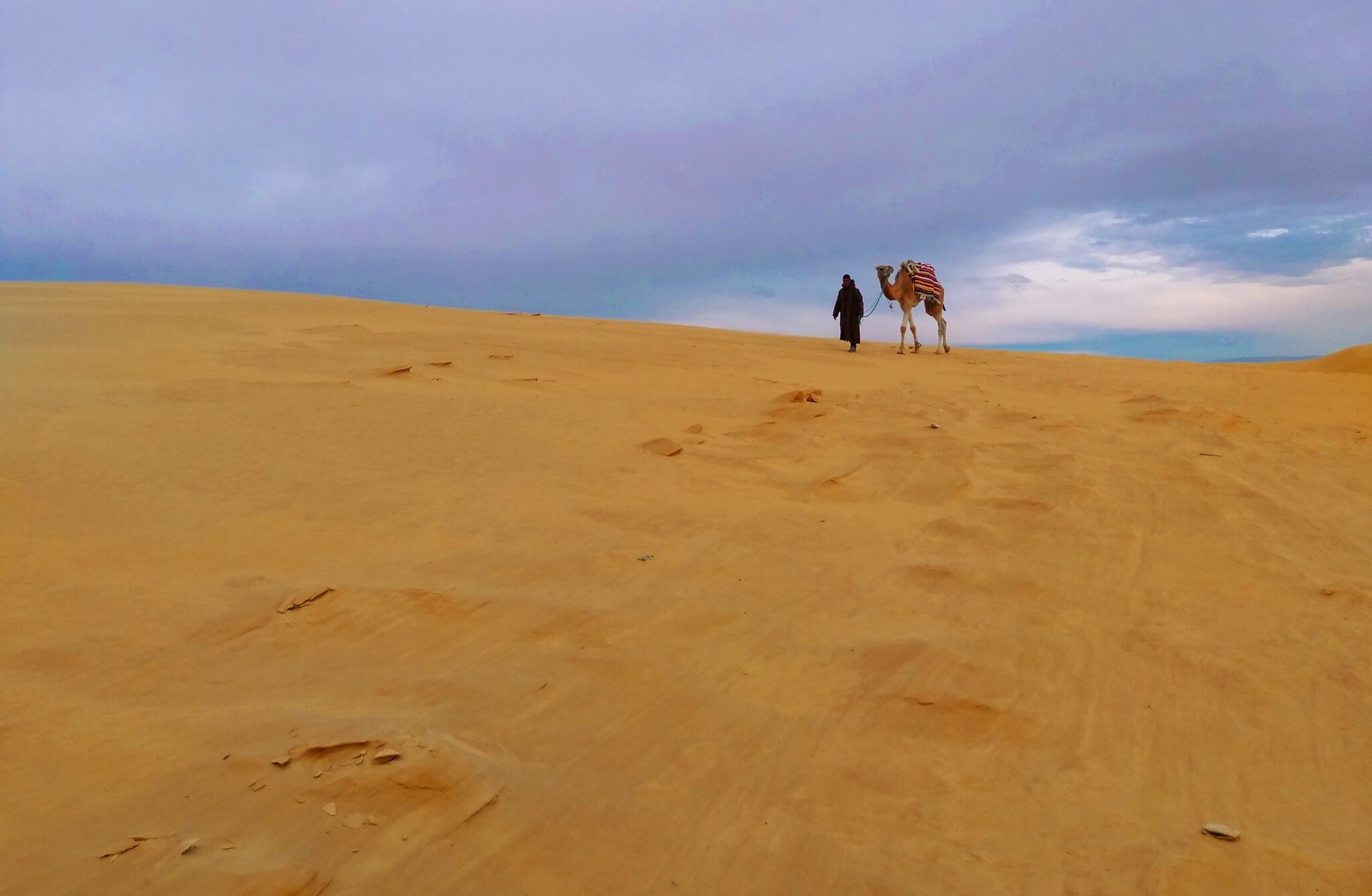
Around Douz, often treated as a gateway to the desert, the landscape shifts into dunes, dry plains, camel routes, palm oases and camps on the edge of the Grand Erg Oriental. Farther west, Tozeur and Nefta are known for large oasis towns and date-palm groves, while Chott el Jerid – a huge salt lake covering roughly 5,000 square kilometres – creates one of Tunisia’s strangest natural scenes, with a flat white surface, heat haze and mirage-like horizons. The south also adds architecture and cinema-like landscapes to Tunisia’s desert image. Matmata is associated with underground troglodyte houses dug into the earth for protection against heat, while ksour and fortified granaries around places such as Tataouine show how communities stored goods and adapted to dry inland conditions.
10. Star Wars filming locations
Southern Tunisia gained an unexpected place in cinema history when its deserts, salt flats and old settlements became the real-world face of Tatooine. George Lucas filmed parts of the first Star Wars movie in Tunisia in 1976, and the country’s name is built into the series itself: Tatooine was adapted from Tataouine, a town in Tunisia’s far south. The strongest film associations are spread across several places rather than one single site – Matmata’s underground Hotel Sidi Driss was used for the Lars homestead interior, areas near Tozeur and Nefta provided desert and set locations, Chott el Jerid gave the films a stark salt-flat landscape, and ksour in the Tataouine region later appeared in the prequel-era scenes.
This connection is not as historically important as Carthage, Kairouan or El Jem, but it has become one of Tunisia’s most recognizable modern cultural associations. For film fans, the south of the country is not only a desert region of oases, troglodyte houses, fortified granaries and salt lakes; it is also one of the few places where a famous fictional world can still be linked to real landscapes and surviving sets.
11. Tunisian cuisine
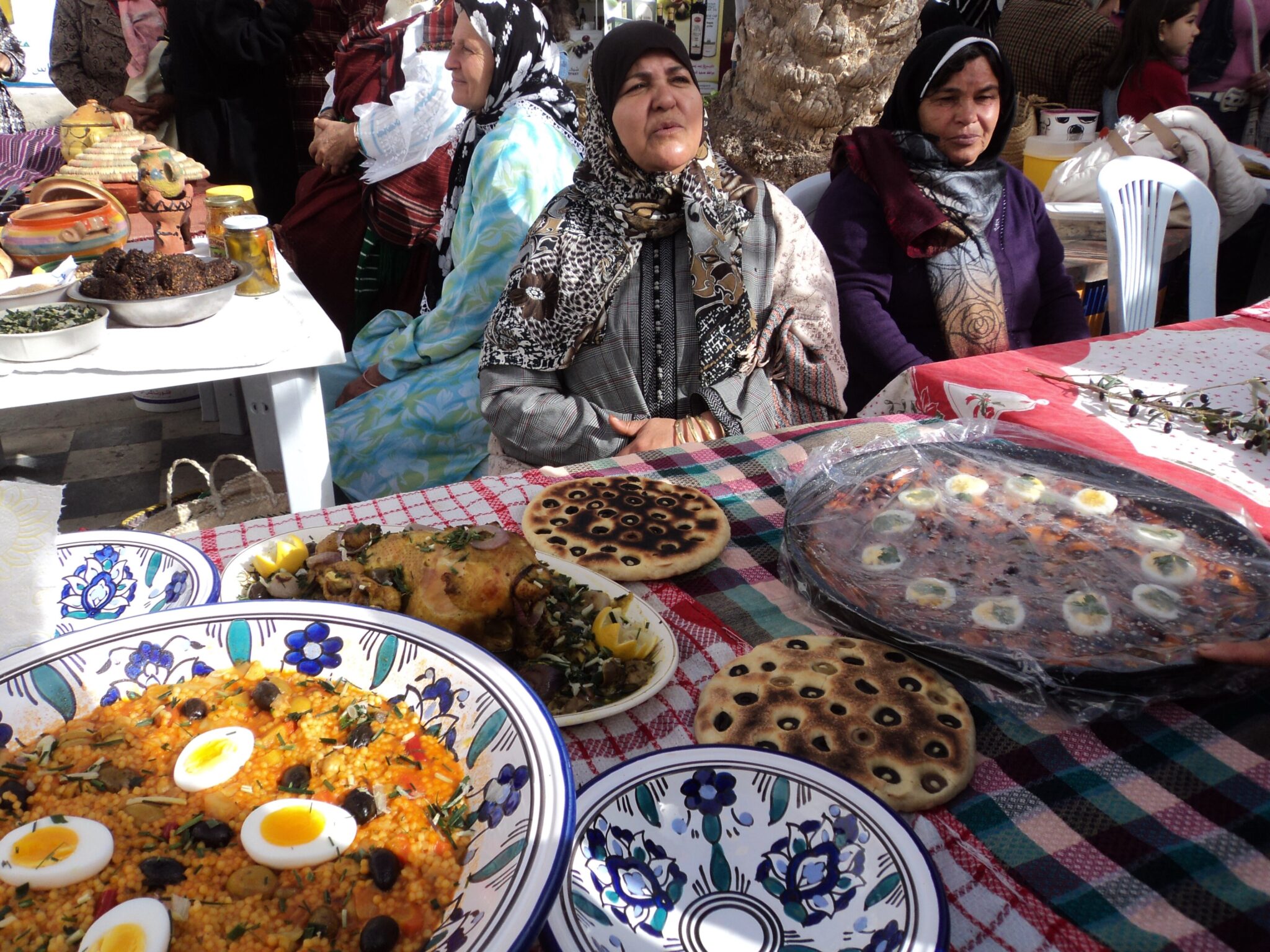
Heat is one of the first things many visitors notice in Tunisian food. Compared with the softer spice profiles often associated with the Maghreb, Tunisia leans boldly into chilli, garlic, olive oil, tomatoes, seafood, preserved ingredients and harissa – the red pepper paste that has become one of the country’s clearest culinary symbols. Couscous remains central, but in Tunisia it often arrives with lamb, fish, vegetables, chickpeas or a fiery sauce that gives it a sharper character. Brik, with its thin pastry and egg filling, lablabi made from chickpeas and bread, ojja with eggs and spicy tomato sauce, grilled fish, merguez, mechouia salad and date-based sweets all show a cuisine built around strong flavour rather than heavy presentation.
12. Harissa
Few ingredients define Tunisia as clearly as harissa. Made mainly from dried red chillies, garlic, salt, spices and olive oil, it sits somewhere between condiment, cooking base and national habit. It can be stirred into couscous sauce, served with grilled fish or meat, spread into sandwiches, added to lablabi, mixed with olive oil for bread, or used to sharpen soups, stews and vegetable dishes. In 2022, the knowledge and practices connected with harissa were added to UNESCO’s intangible cultural heritage list, reflecting its place in Tunisian domestic food traditions rather than only in restaurant cooking.
13. Olive oil
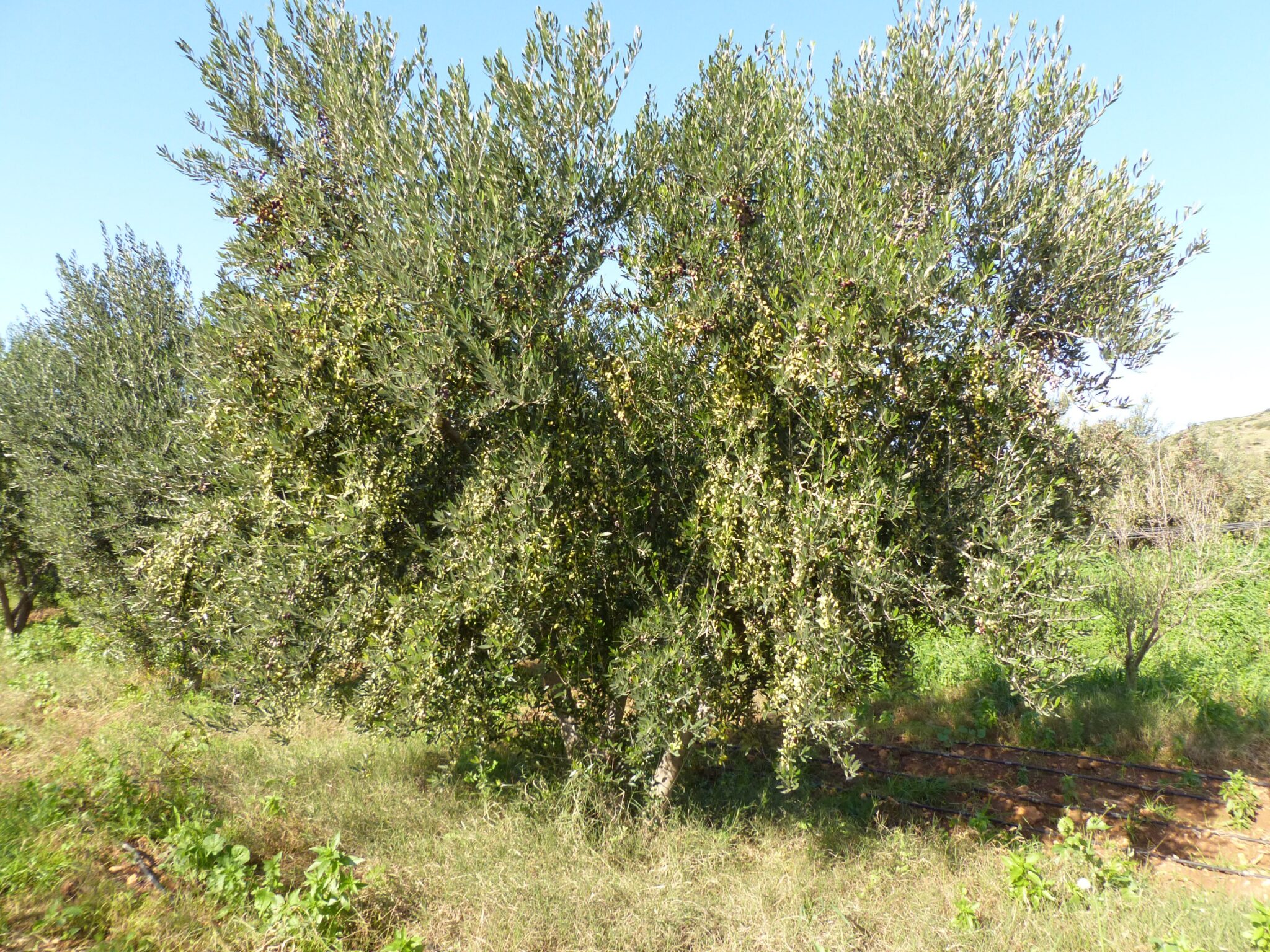
Across Tunisia, olive trees are not just part of the countryside; they are one of the foundations of rural life and the export economy. The country has roughly 1.8–1.9 million hectares of olive groves, spread from the north to the dry central and southern regions, where trees are spaced widely to survive heat and limited rainfall. Olive oil appears in everyday cooking as naturally as bread or harissa: poured over salads, served with flatbread, used with grilled fish and vegetables, or added to stews, couscous and simple home dishes. In the landscape, old groves give Tunisia one of its most characteristic Mediterranean images – low silver-green trees stretching across dry fields, villages and coastal plains.
Economically, olive oil gives Tunisia a weight that many travellers do not immediately notice. The country is regularly among the world’s major producers and exporters, and in recent years much of its output has been sold abroad in bulk, especially to European markets, rather than under widely recognized Tunisian brands. That has created a paradox: Tunisian oil is important in the global olive-oil trade, but its origin has often been less visible to consumers than Spanish, Italian or Greek labels.
14. The Jasmine Revolution
In January 2011, Tunisia moved from tourist brochures into the centre of world politics. After weeks of public protest over corruption, unemployment, inequality and political repression, President Zine el-Abidine Ben Ali left power on 14 January 2011, ending a rule that had lasted since 1987. The uprising became known internationally as the Jasmine Revolution, but its importance was not in the name; it showed that a long-standing authoritarian government in the Arab world could be challenged from the street and forced to collapse.
The effects reached far beyond Tunisia. The events of 2010–2011 helped trigger a wider wave of protests across the Middle East and North Africa that became known as the Arab Spring. For Tunisia’s modern image, this history is as important as Carthage, Kairouan or the Mediterranean coast, but in a different way. It connects the country with youth frustration, demands for dignity, political change, civic protest and the difficult question of what comes after revolution.
If you’ve been captivated by Tunisia like us and are ready to take a trip to Tunisia – check out our article on interesting facts about Tunisia. Check if you need an International Driving Permit in Tunisia before your trip.

Published May 24, 2026 • 11m to read