

Morocco is famous for Marrakesh, Fez, ancient medinas, the Sahara Desert, the Atlas Mountains, colourful souks, riads, Moroccan cuisine, mint tea, argan oil, Islamic architecture, Amazigh culture, and its position between Africa, Europe, the Atlantic, and the Arab world. It is one of Africa’s strongest tourism brands: Morocco received a record 19.8 million tourists in 2025, according to the country’s tourism ministry, and it is preparing to co-host the 2030 FIFA World Cup with Spain and Portugal.
1. Marrakesh
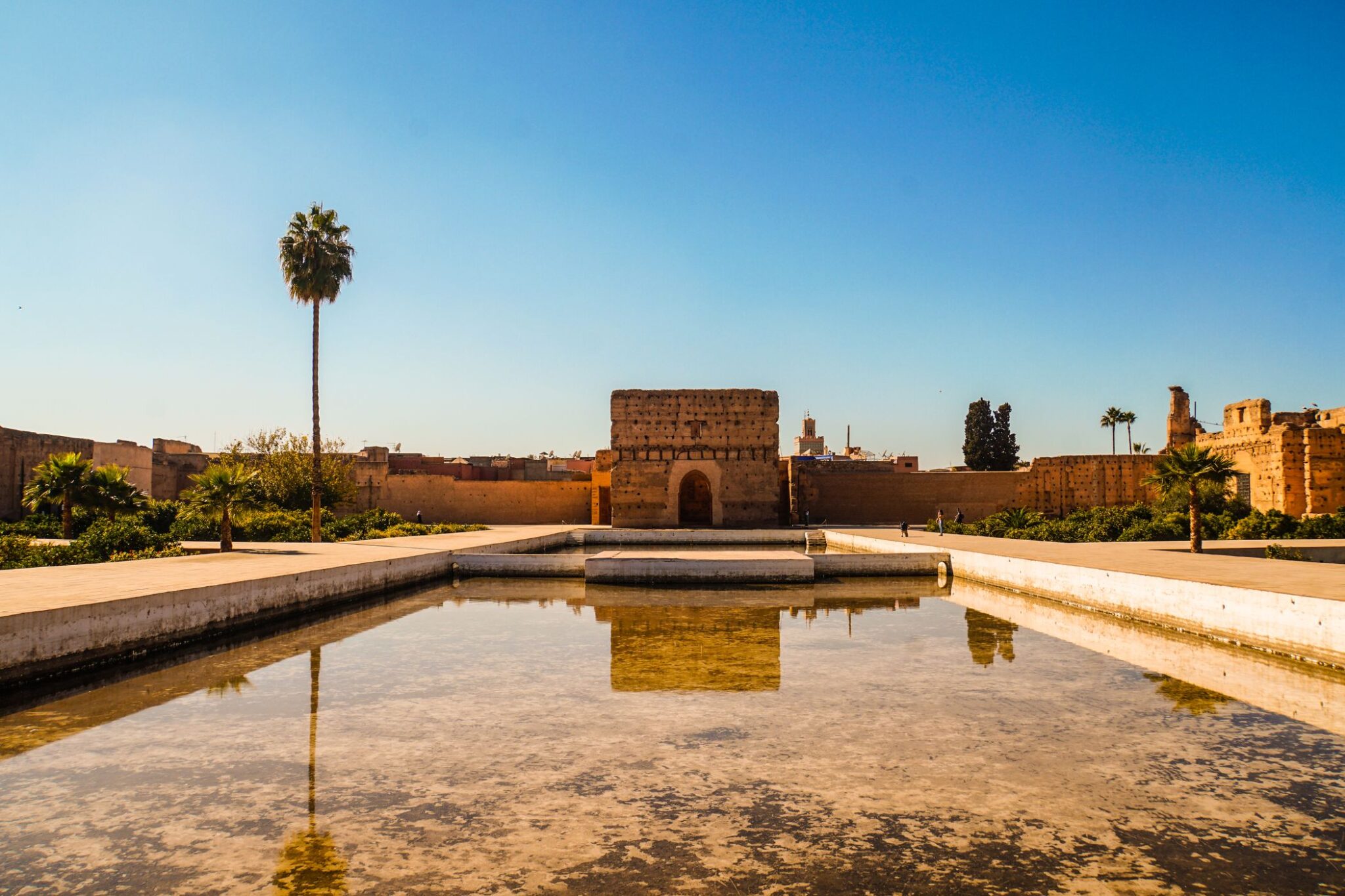
Founded by the Almoravids in the 11th century, Marrakesh grew at the edge of the Atlas Mountains into one of Morocco’s great imperial capitals. From here, dynasties controlled caravan routes, built mosques and palaces, and shaped the architecture of the western Islamic world. The old medina still keeps that structure: thick red ramparts, monumental gates, the Koutoubia Mosque, the Kasbah district, Ben Youssef Madrasa, the Saadian Tombs, and the remains of royal palaces show a city that was designed for power, trade, religion, and ceremony, not just for beauty.
By evening, Marrakesh changes character. Jemaa el-Fnaa fills with smoke from food stalls, music, voices, performers, and crowds, turning the historic centre into one of North Africa’s most intense public spaces. Around it, narrow lanes lead into workshops, spice stalls, carpet shops, courtyard houses, hammams, and rooftop cafés, while modern hotels and new districts spread beyond the old walls.
2. Jemaa el-Fna and medina culture
At the centre of Marrakesh, Jemaa el-Fna works less like an ordinary square and more like the city’s open-air theatre. Its cultural space was first proclaimed by UNESCO in 2001 and later inscribed on the Representative List of the Intangible Cultural Heritage of Humanity in 2008, while Moroccan authorities had already protected it as part of national artistic heritage in 1922. That status matters because Jemaa el-Fna is not valued only for architecture or age; its importance comes from the human activity that fills it – oral storytelling, music, food culture, street performance, trade, and public gathering.
3. Fez
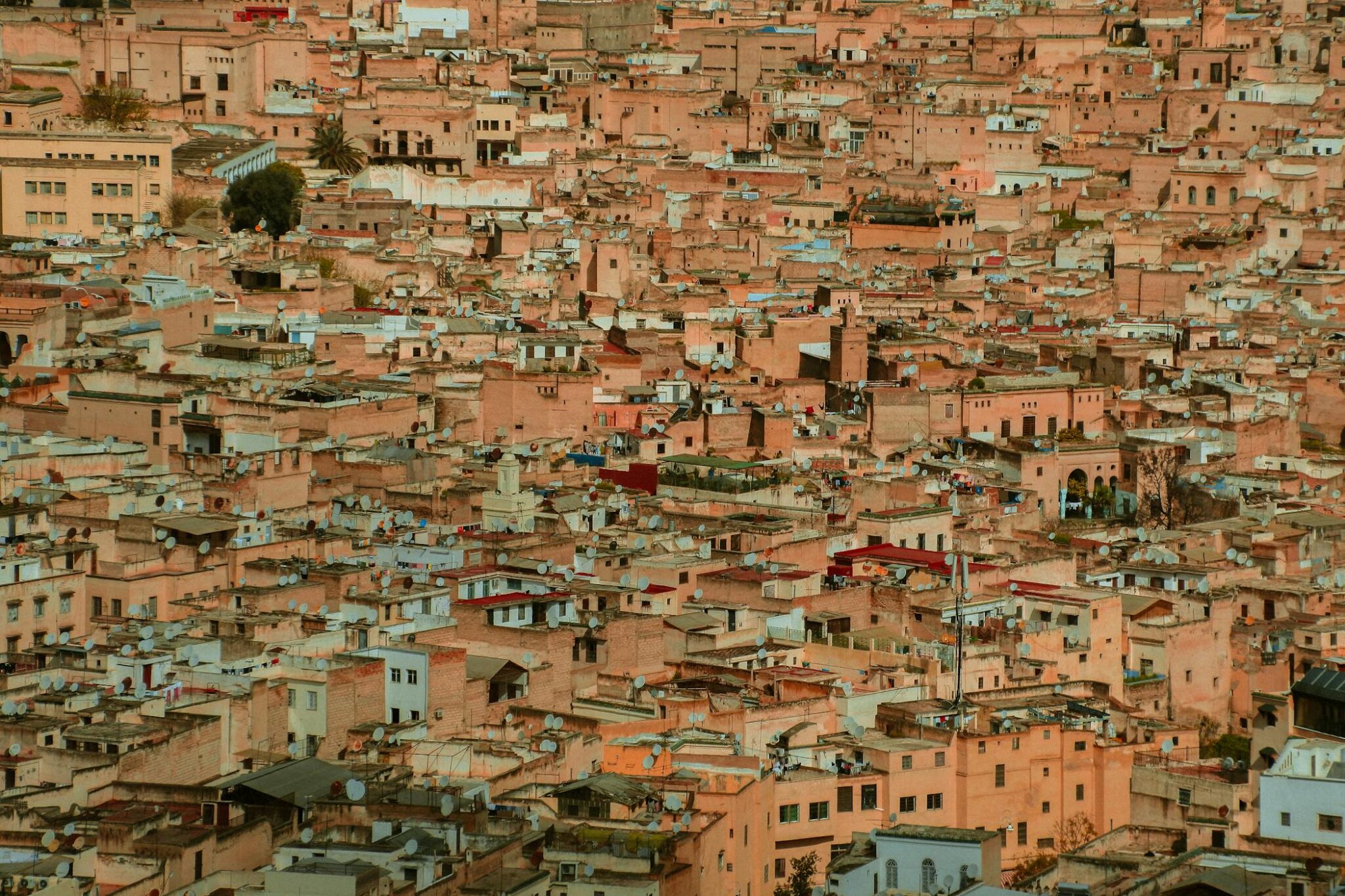
In Fez, Morocco’s history feels packed into a city that was built for walking, learning, prayer, trade, and craft. Fez el-Bali, the oldest part of the city, dates back to the Idrisid period at the end of the 8th century, while Fez el-Jdid was added in the 13th century under the Marinids. Together they form one of the most important historic medinas in the Islamic world, protected as a UNESCO World Heritage Site since 1981. Its narrow lanes, city gates, courtyard houses, madrasas, mosques, fountains, workshops, and covered markets preserve an urban pattern shaped over more than a thousand years.
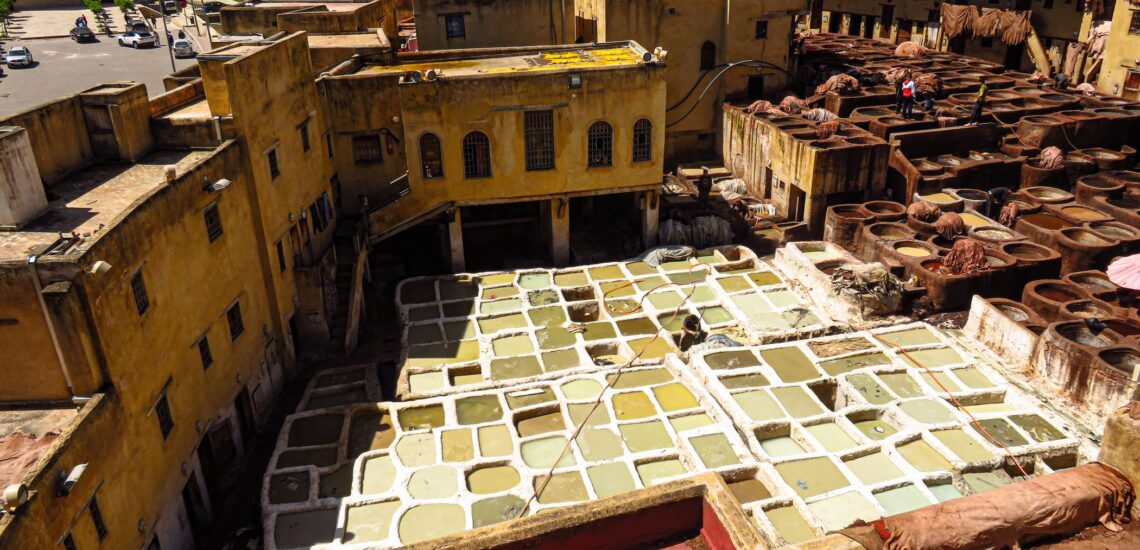
Unlike Marrakesh, Fez is not famous mainly for spectacle; its strength is concentration. The city is associated with Al-Qarawiyyin, founded in 859 and long regarded as one of the great centres of Islamic learning, as well as with traditional crafts that still occupy entire districts. The Chouara Tanneries, with their stone dyeing vats and leather workshops, are among the clearest symbols of that continuity.
4. The Sahara Desert
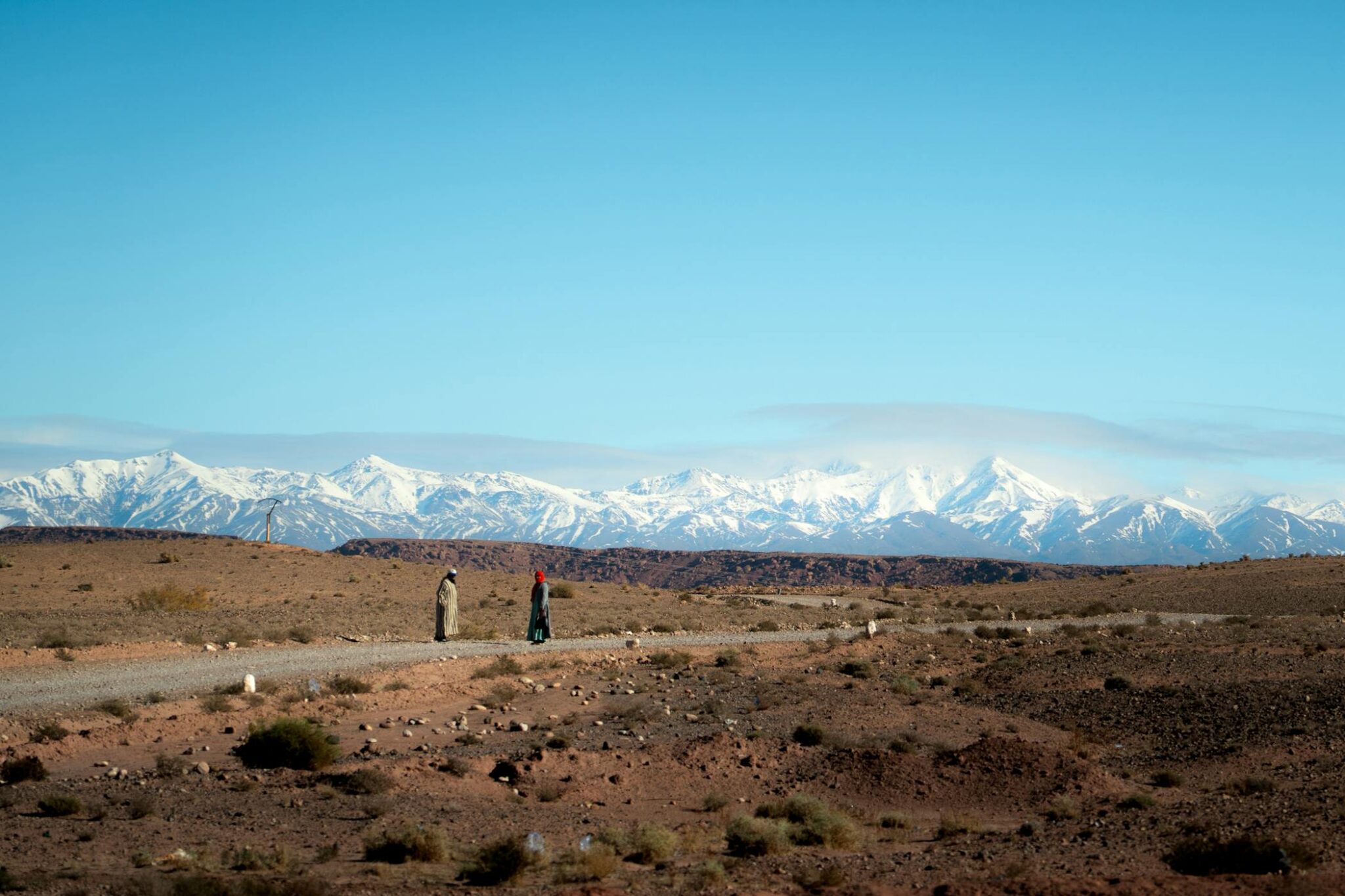
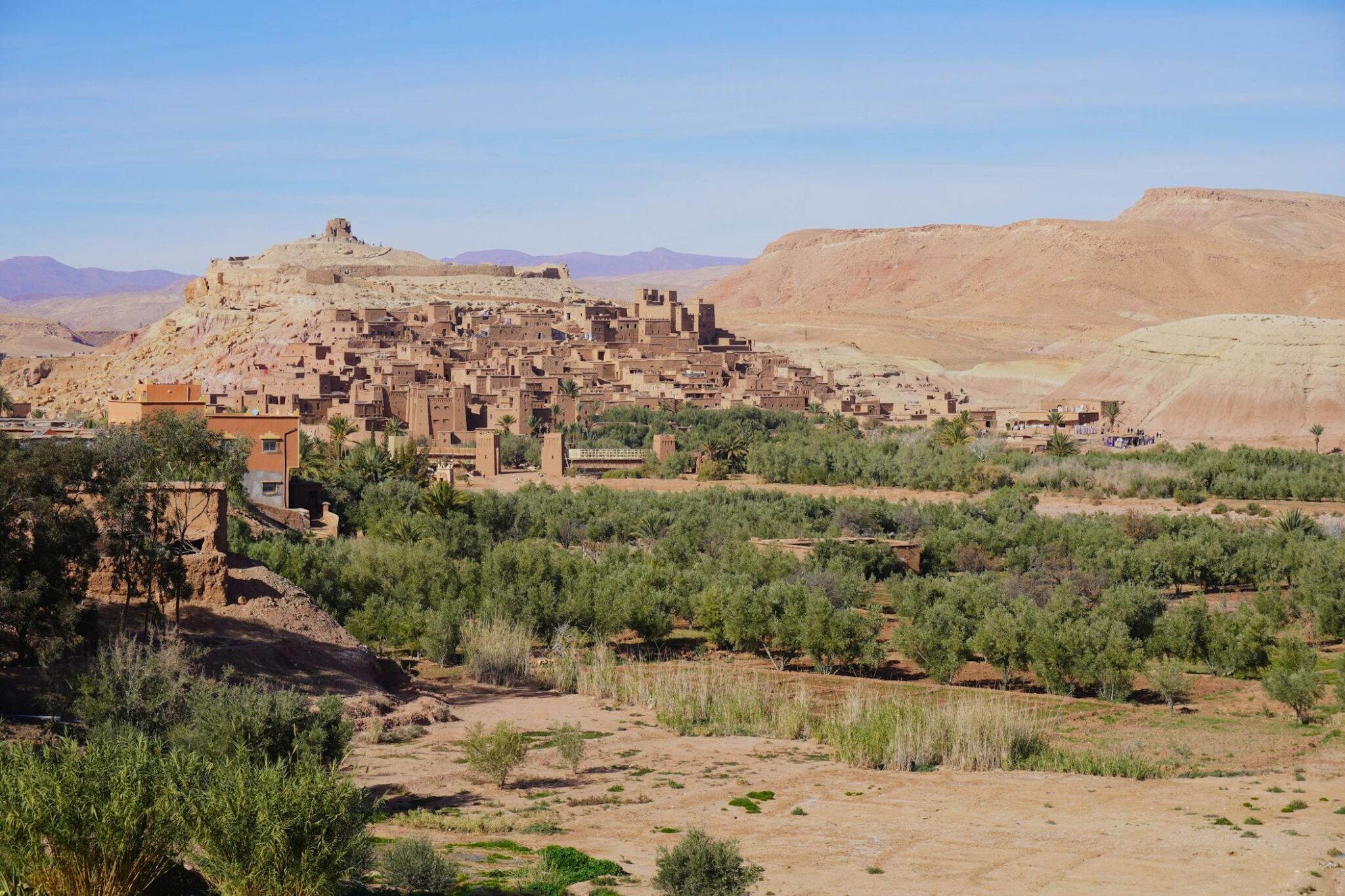
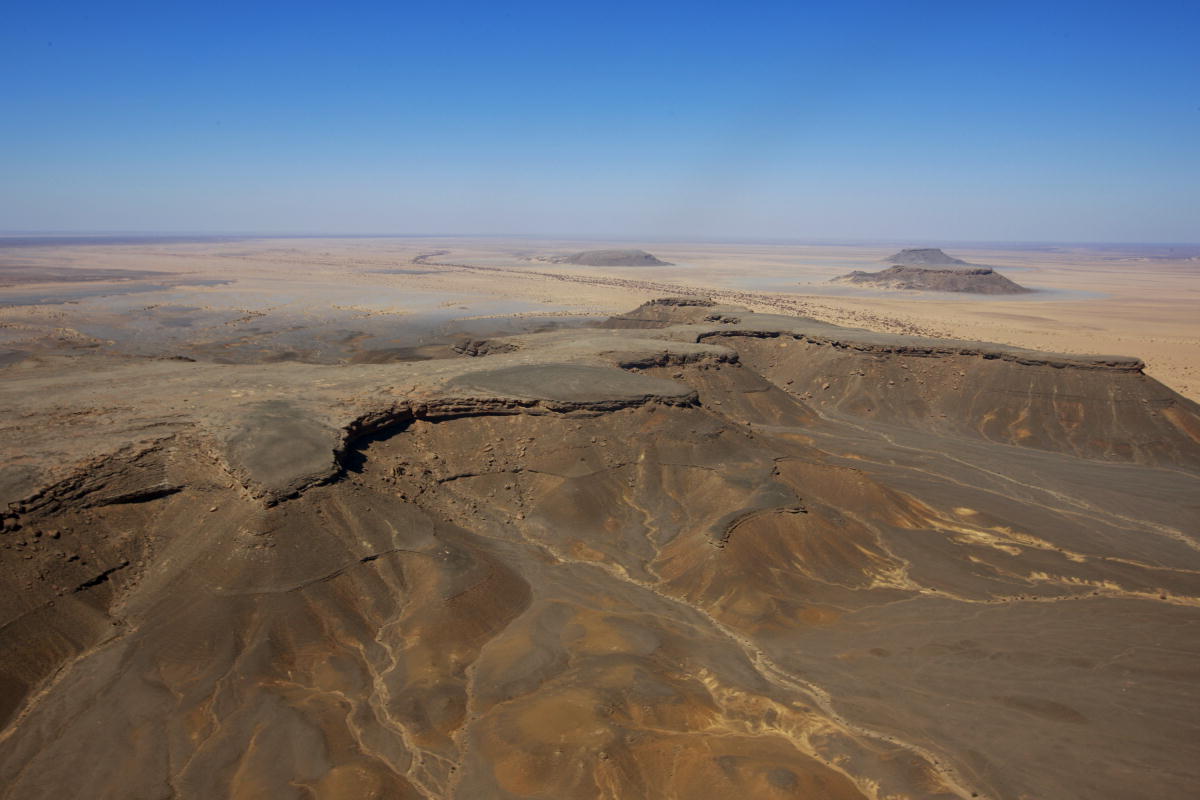
After the High Atlas come dry plateaus, palm valleys, mud-brick kasbahs, and old trading towns such as Rissani and Erfoud, before the sand finally takes over near Merzouga. Erg Chebbi is the country’s best-known dune area: its sand ridges rise up to about 150 meters above the surrounding rocky plain and stretch for roughly 28 kilometers from north to south. The desert’s appeal comes from the journey as much as the destination. Routes from Marrakesh or Fez often pass through the Draa and Tafilalet regions, where fortified villages, palm groves, dry river valleys, and earthen architecture show how people lived along the edge of the Sahara for centuries. Aït Ben Haddou, protected by UNESCO since 1987, is one of the clearest examples of this pre-Saharan building tradition and once stood on a trading route linking Marrakesh with lands beyond the desert.
5. The Atlas Mountains
Above Marrakesh, the country rises sharply into the High Atlas, a mountain chain that cuts across central Morocco for about 740 kilometers. Its highest point is Mount Toubkal, which reaches around 4,165 meters and is also the highest summit in North Africa. This gives Morocco a landscape that many visitors do not expect: snow on high peaks in winter, steep valleys, terraced fields, walnut and apple orchards, stone-and-earth villages, and mountain roads that eventually lead toward Ouarzazate and the desert south.
Life in the Atlas adds another layer to Morocco’s identity. Amazigh communities have shaped these valleys for centuries, building villages into slopes, farming small irrigated terraces, and using mountain routes that once connected markets, oases, and caravan towns. For travellers, the region is famous for trekking around Imlil and Toubkal, driving through high passes, visiting waterfalls and valleys, and watching the scenery change from green mountain villages to dry plateaus and desert-edge settlements.
6. Chefchaouen
Tucked into the Rif Mountains of northern Morocco, Chefchaouen began in 1471 as a fortified mountain town and later became a refuge for Muslims and Jews leaving Spain. That history helps explain why it feels different from Morocco’s imperial cities: smaller, steeper, quieter, and more inward-looking. For centuries it was also relatively closed to outsiders, which helped preserve its compact medina, kasbah, Andalusian-influenced houses, narrow stairways, and strong local craft traditions. Blue paint turned Chefchaouen into one of Morocco’s most photographed places, yet the setting matters just as much as the colour. The town sits at about 560–600 meters above sea level, with mountain slopes rising behind its lanes and viewpoints looking over tiled roofs, white walls, small shops, cats, fountains, and courtyards.
7. Casablanca and Hassan II Mosque
Casablanca does not look like Morocco’s postcard cities, and that is exactly why it matters. On the Atlantic coast, it grew into the country’s largest urban centre and its main commercial engine, with the wider Casablanca-Settat region reaching about 7.69 million residents in Morocco’s 2024 census. The city’s identity is built around scale: ports, banks, offices, traffic, seafront districts, 20th-century boulevards, and a downtown where Art Deco and neo-Moroccan façades still show the ambitions of the French Protectorate era.
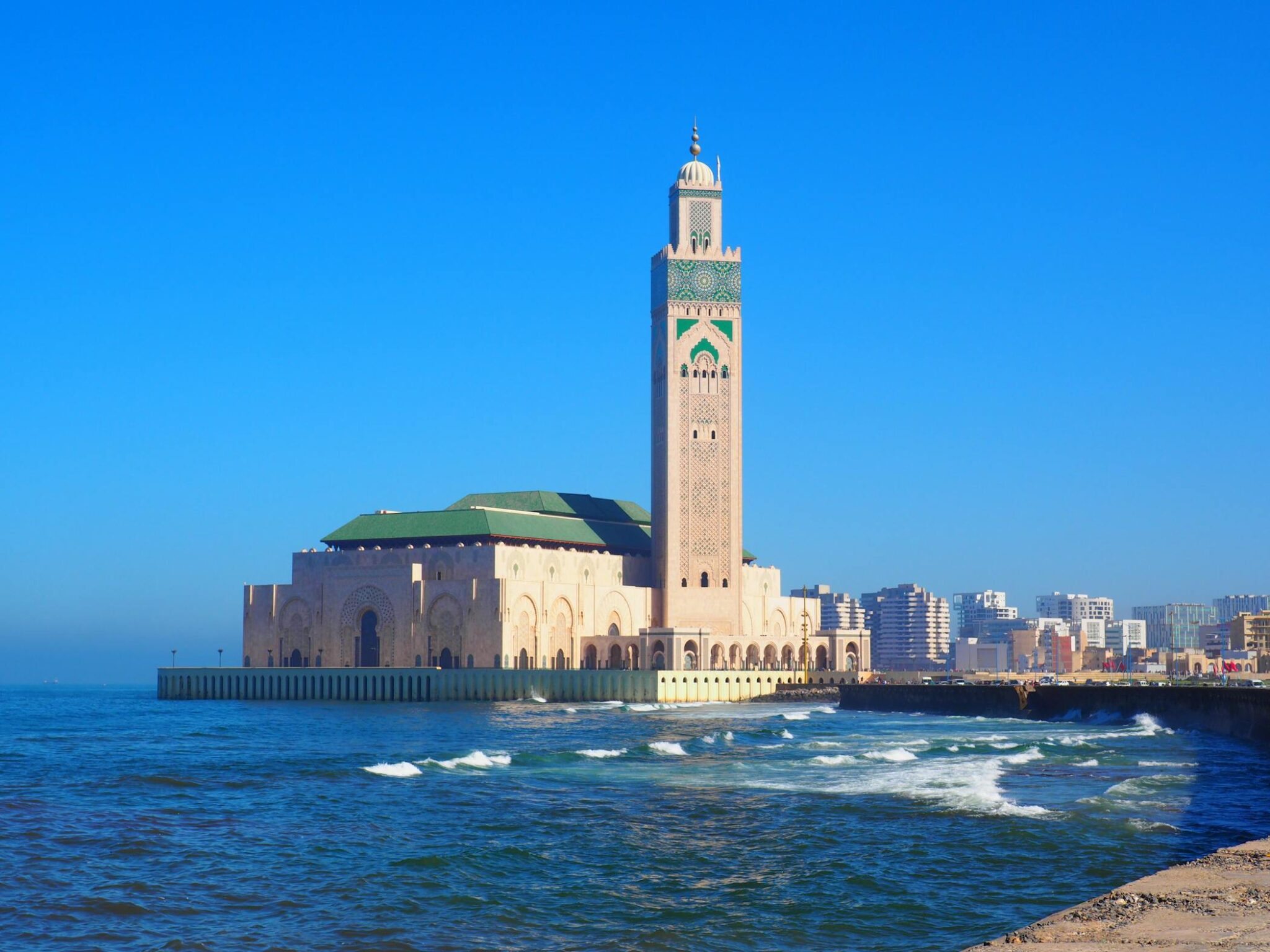
Rising above the Atlantic, the Hassan II Mosque gives Casablanca the landmark that its restless urban landscape needs. Completed in 1993, it stands partly over the water and is dominated by a minaret about 200–210 meters high, making it one of the tallest religious towers in the world. The complex can hold around 25,000 worshippers inside, with space for many more on the surrounding esplanade, and its decoration brings together Moroccan craft traditions on a huge modern scale: zellige tilework, carved plaster, cedar wood, marble, tadelakt, copper, and geometric ornament.
8. Rabat
Rabat works differently from Morocco’s more theatrical cities. It is not built around the intensity of Marrakesh’s medina or the medieval density of Fez; its identity is quieter, more official, and more carefully planned. After Morocco became a French protectorate in 1912, Rabat was developed as an administrative capital, with broad avenues, government districts, residential quarters, gardens, and public buildings laid out beside much older urban layers. This unusual combination helped the city enter the UNESCO World Heritage List in 2012 as a capital where 20th-century planning exists alongside medieval and early modern heritage. The protected area covers about 348.6 hectares and includes both the planned new town and older landmarks such as the Hassan Mosque, begun in 1184, the Almohad walls and gates, the Kasbah of the Udayas, and Chellah.
9. Ait Ben Haddou and kasbah architecture
On the old route between Marrakesh and the Sahara, Ait Ben Haddou rises from the Ounila Valley like a fortified clay city. The ksar, located about 30 kilometers from Ouarzazate, is made from traditional earthen materials – packed earth, clay bricks, wood, and straw – shaped into defensive walls, corner towers, houses, granaries, and narrow passages. Its architecture belongs to Morocco’s pre-Saharan south, where settlements had to protect people, goods, animals, and stored grain along caravan routes linking the mountains, oases, and desert trade networks. Since 1987, Ait Ben Haddou has been protected as a UNESCO World Heritage Site, not as a single monument, but as one of the best-preserved examples of this older fortified building tradition.
10. Essaouira and the Atlantic coast
Wind is part of Essaouira’s identity. On Morocco’s Atlantic shore, the former Mogador developed in the 18th century as a planned fortified port under Sultan Mohammed ben Abdallah, with sea-facing ramparts, bastions, gates, warehouses, and a medina shaped by both Moroccan urban life and European military design. Unlike Fez or Marrakesh, Essaouira was not a maze that grew slowly over centuries; it was built with a clearer strategic purpose – to control maritime trade and connect Morocco’s interior routes with Europe, the Atlantic world, and Saharan commerce. Its UNESCO-listed medina, protected since 2001, preserves that unusual mix of fortress, port, market town, and coastal settlement.
By the water, the city feels far removed from Morocco’s desert image. Fishing boats crowd the harbour, gulls circle above the docks, seafood grills smoke near the port, and the old walls face constant Atlantic wind. That wind helped give Essaouira a modern reputation for kitesurfing and windsurfing, while its blue-and-white streets, art galleries, Gnawa music traditions, and relaxed pace made it one of Morocco’s most atmospheric coastal cities.
11. Moroccan cuisine
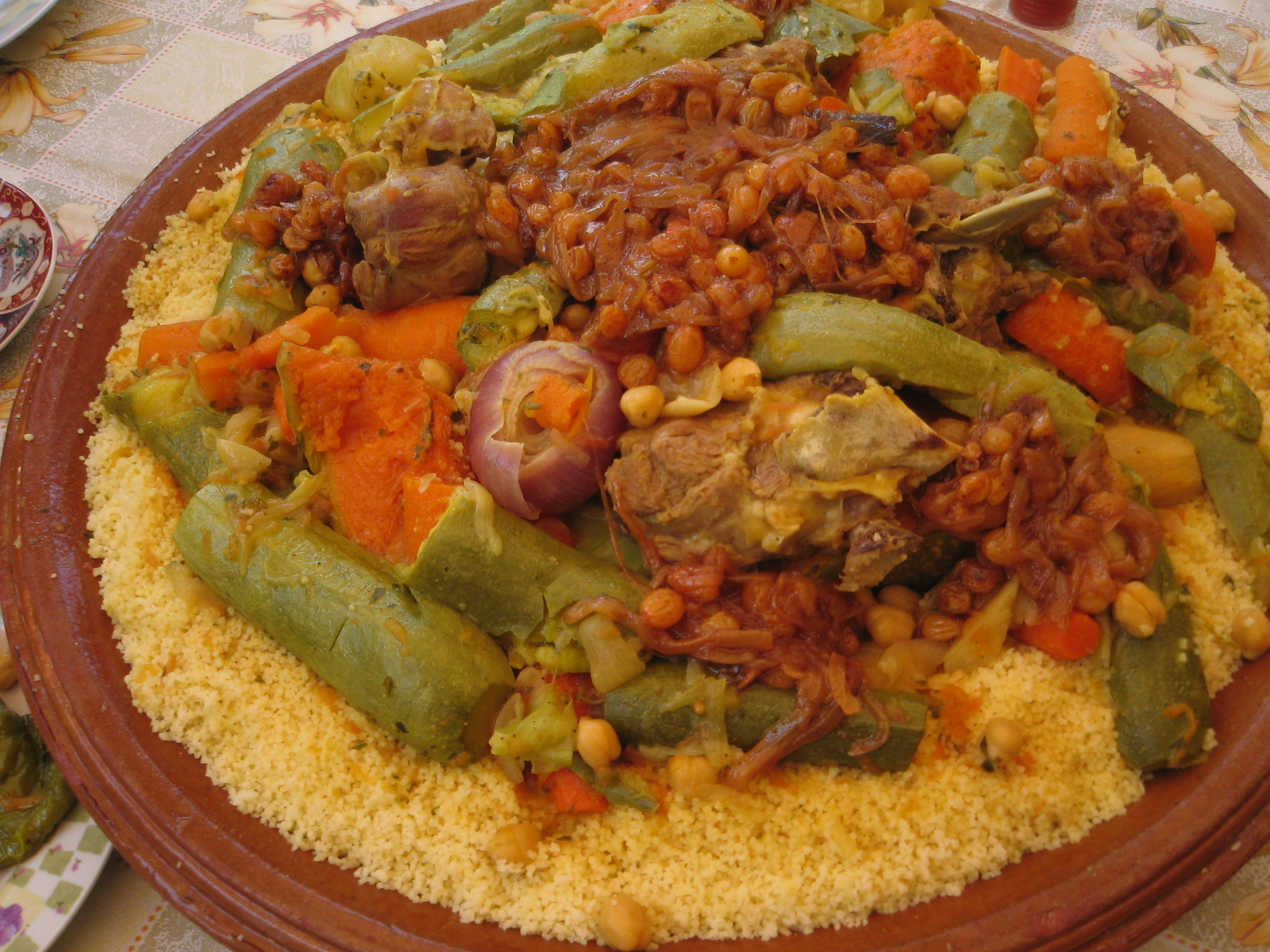
A Moroccan meal is often built around patience rather than speed. Tagine, the country’s best-known dish abroad, takes its name from the conical clay pot in which meat, poultry, fish, or vegetables cook slowly with spices, herbs, olives, dried fruit, or preserved lemons. Couscous carries an even wider cultural weight: traditionally served on Fridays and family occasions, it belongs to a shared Maghreb food heritage recognized by UNESCO in 2020. Harira appears especially during Ramadan, pastilla brings together savoury filling and sweet-spiced pastry, while everyday tables depend on bread, olives, lentils, beans, grilled meats, salads, dates, almonds, and seasonal produce.
12. Mint tea and hospitality
Green tea, fresh mint, and sugar are brewed in a metal teapot and poured into small glasses, often from a height so that foam forms on the surface. The drink became especially widespread in Morocco during the 19th century, when imported Chinese green tea entered local habits and was gradually absorbed into everyday hospitality. Today it appears everywhere: in family homes, guesthouses, mountain villages, desert camps, market stalls, carpet shops, and roadside cafés. The meaning of the tea is in the pause it creates. A glass may be offered before a conversation begins, during bargaining, after a meal, or simply because a guest has arrived. It is usually sweet, sometimes very sweet, and the careful pouring matters almost as much as the taste.
13. Souks, riads and Moroccan craftsmanship
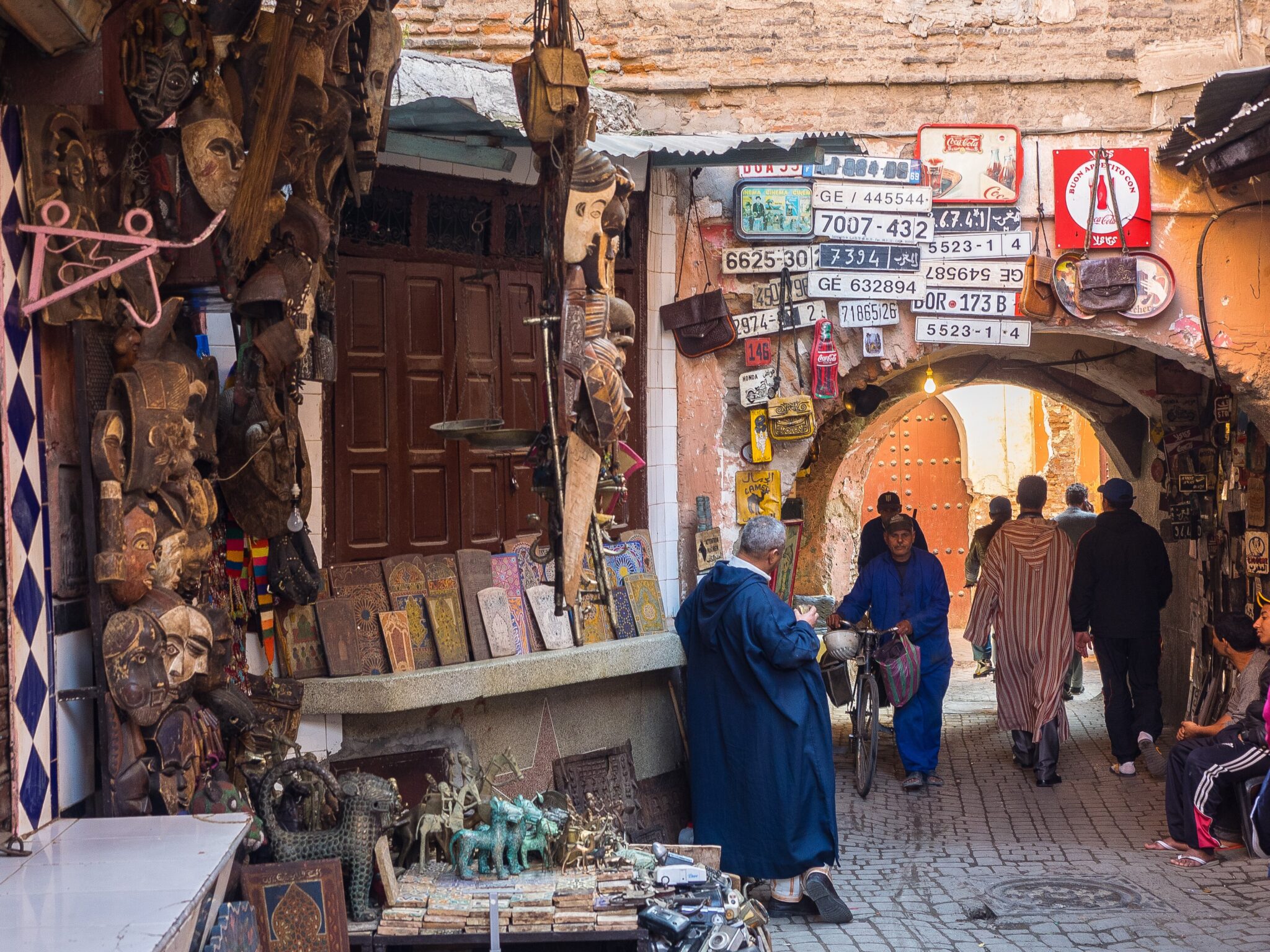
Behind Morocco’s most famous medina doors, design usually turns inward. A traditional riad is built around an interior courtyard or garden, often with a fountain at its centre, so the house feels private from the street but open, cool, and decorative inside. This architecture became one of Morocco’s strongest travel images, especially in Marrakesh and Fez, where many old houses have been restored as guesthouses. Zellige tilework, carved plaster, cedarwood ceilings, metal lanterns, painted doors, rooftop terraces, and shaded courtyards all belong to this visual world, where comfort is created through pattern, water, shade, and handwork rather than large exterior façades.
14. Argan oil
In southwestern Morocco, the argan tree grows in a harsh semi-arid landscape where few plants can survive as well. Its main natural range is closely tied to the Souss-Massa region and the wider Arganeraie Biosphere Reserve, recognized by UNESCO in 1998. The tree is valuable not only because its kernels produce oil, but because it helps protect fragile soils, supports rural livelihoods, and forms part of a landscape adapted to drought, heat, and grazing. Morocco has around 800,000–830,000 hectares of argan woodland, making it one of the country’s most distinctive natural resources.
Argan oil became internationally recognizable because it connects several versions of Morocco at once. In the kitchen, roasted argan oil is used for flavour, often with bread, amlou, salads, or traditional dishes; in global markets, cosmetic argan oil is associated with haircare and skincare. The knowledge around harvesting, cracking the nuts, pressing the kernels, preparing food products, and using the oil has been recognized as intangible cultural heritage since 2014.
15. Amazigh culture
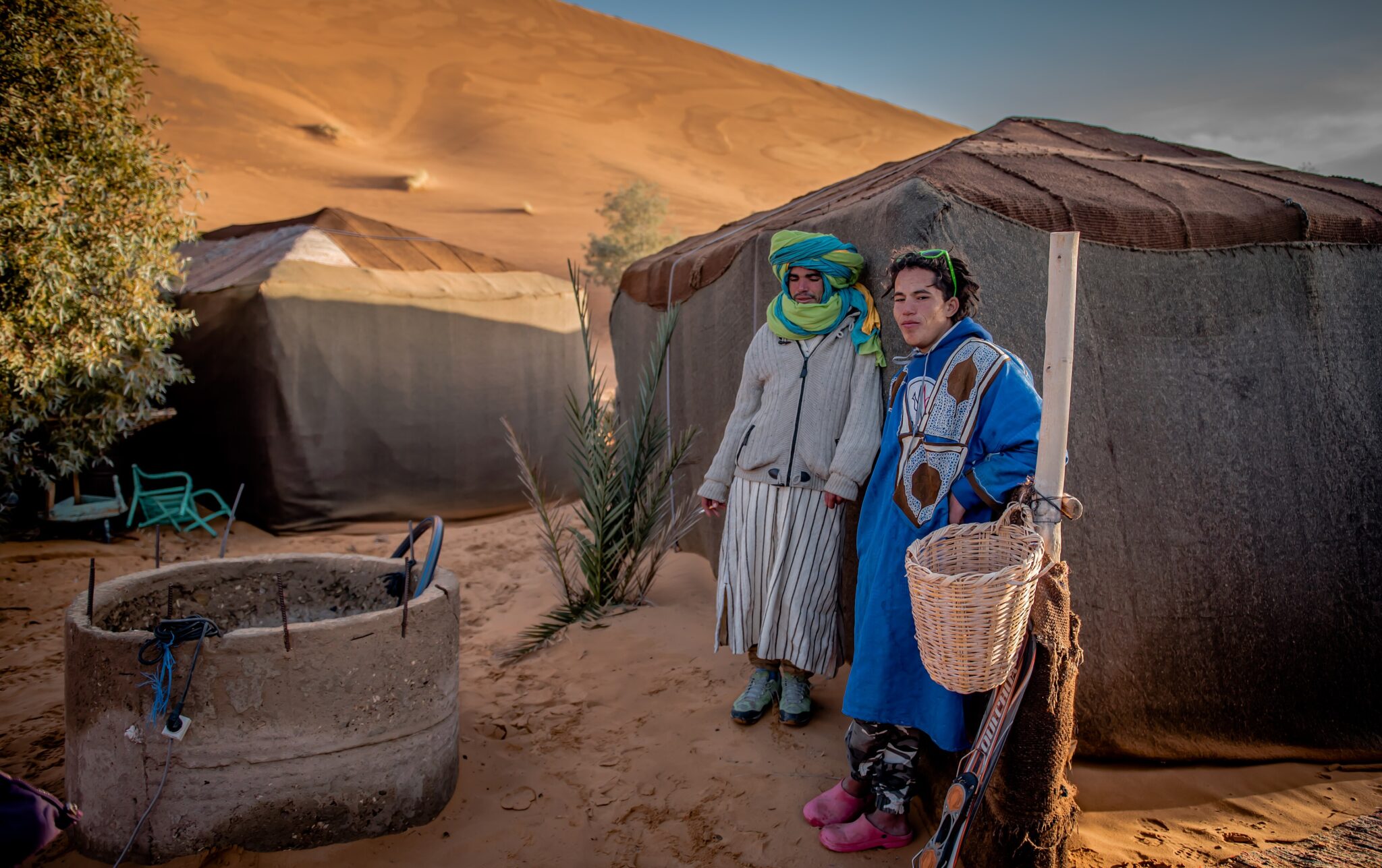
Their heritage is visible in the High Atlas villages, the Rif, the Souss region, the Draa and Tafilalet routes, and many southern kasbah landscapes. It appears in carpets with geometric symbols, silver jewellery, oral poetry, drums and dance, clay architecture, local food traditions, seasonal markets, and the Tifinagh script used for Amazigh writing. Morocco also gave Amazigh official language status in its 2011 constitution, placing it alongside Arabic as part of the country’s national identity. This culture is essential because Morocco cannot be understood only through Arab, Islamic, or imperial-city history. Many of the country’s most memorable travel experiences – crossing mountain passes, staying in rural guesthouses, visiting palm valleys, hearing village music, buying handwoven carpets, or travelling toward the Sahara – pass through areas where Amazigh life has deep roots.
16. Moroccan football and the 2030 World Cup
The night Morocco beat Portugal 1–0 on 10 December 2022 changed how the country was seen in world sport. That victory sent Morocco into the semi-finals of the FIFA World Cup in Qatar, making it the first African team – and the first Arab team – to reach that stage of the tournament. The run was not only a football result; it became a national and regional moment, followed by celebrations across Morocco, the Arab world, Africa, and the Moroccan diaspora. The next chapter will be even bigger. In December 2024, FIFA appointed Morocco, Spain, and Portugal as the main hosts of the 2030 FIFA World Cup, with three centenary matches scheduled for Argentina, Paraguay, and Uruguay. For Morocco, this is more than a sports event: it places the country at the centre of a tournament connecting Africa, Europe, and South America in the World Cup’s 100th-anniversary edition.
17. Western Sahara and modern geopolitics
Western Sahara is one of the reasons Morocco appears in international politics beyond tourism, football, trade, and culture. The territory, formerly known as Spanish Sahara, has remained on the United Nations list of Non-Self-Governing Territories since 1963, and its final status is still unresolved. After Spain withdrew in 1975, Morocco gradually took control of most of the territory, while the Polisario Front, backed by Algeria, continued to press for Sahrawi self-determination and independence. A UN-backed ceasefire was accepted in 1991, but the referendum originally connected to that process has never taken place.
Morocco refers to the area as its southern provinces or the Moroccan Sahara and promotes an autonomy plan under Moroccan sovereignty. The Polisario Front and Sahrawi independence supporters reject that position and argue for a self-determination process that includes independence as an option. The dispute also affects Morocco’s relations with Algeria, the African Union, the European Union, the United States, and the UN Security Council. In October 2025, the Security Council renewed the MINURSO mission until 31 October 2026, showing that Western Sahara remains an active diplomatic issue rather than a closed chapter of history.
If you’ve been captivated by Morocco like us and are ready to take a trip to Morocco – check out our article on interesting facts about Morocco. Check if you need an International Driving Permit in Morocco before your trip.

Published May 24, 2026 • 13m to read